Loading...
HOME
POLITICS
CLIMATE
BUSINESS
SCIENCE
WORLD
HISTORY
LIFESTYLE
EDITORIAL
RESOURCES
CONTACT
Showing posts with label Reuters. Show all posts

FEATURE

Uncle Sam: Superhero?


AnswerTips-Enabled


I’ve just returned from Europe with a new understanding of what the world expects from the United States on global climate change, now that Barack Obama will be president.

In a word: Everything.

I spent two days in Poznan, Poland, at the 14th Conference of the Parties – the gathering of nations now underway to work on a global climate deal scheduled to be signed one year from now in Copenhagen. From there, I went to London for a series of meetings with business and environmental leaders. Because I’ve been involved in proposing a climate action plan for the next president and Congress – one of dozens undoubtedly descending upon the transition team – everyone wanted my take on what President Obama will do.

The weather in Poland was cold and gloomy, the weather in London was cool and foggy, but the mood in both places was sunny in anticipation of U.S. leadership. Obama’s approaching inauguration has filled international climate activists with hope.

But – and this will be good news for the president-elect – I came away with the sense that the world community isn’t expecting Obama to be Captain America, single-handedly preventing a tragic decline in the Earth’s hospitality to our species. The world expects the superhero to be America, the nation. Obama’s election isn’t seen as the anointment of a miracle-worker; it’s seen as a sign that America has returned to its senses, has reasserted its ideals in a way that surprised even us Americans, and has become in the words of one colleague in London, “cool again”.

(At one event in London, I spoke to a gathering of environmental leaders at the historic East India Club, where the walls are adorned with portraits of the United Kingdom’s heroes. As the stern visage of Winston Churchill looked down upon us, I was reminded of something he said that perfectly summarizes the state of climate policy in the United States as Obama takes office: “Americans can always be counted on to do the right thing…after they have exhausted all other possibilities.”) Continued...


FEATURE

Cost of Forest Loss Exceeds Current Banking Crisis


AnswerTips-Enabled


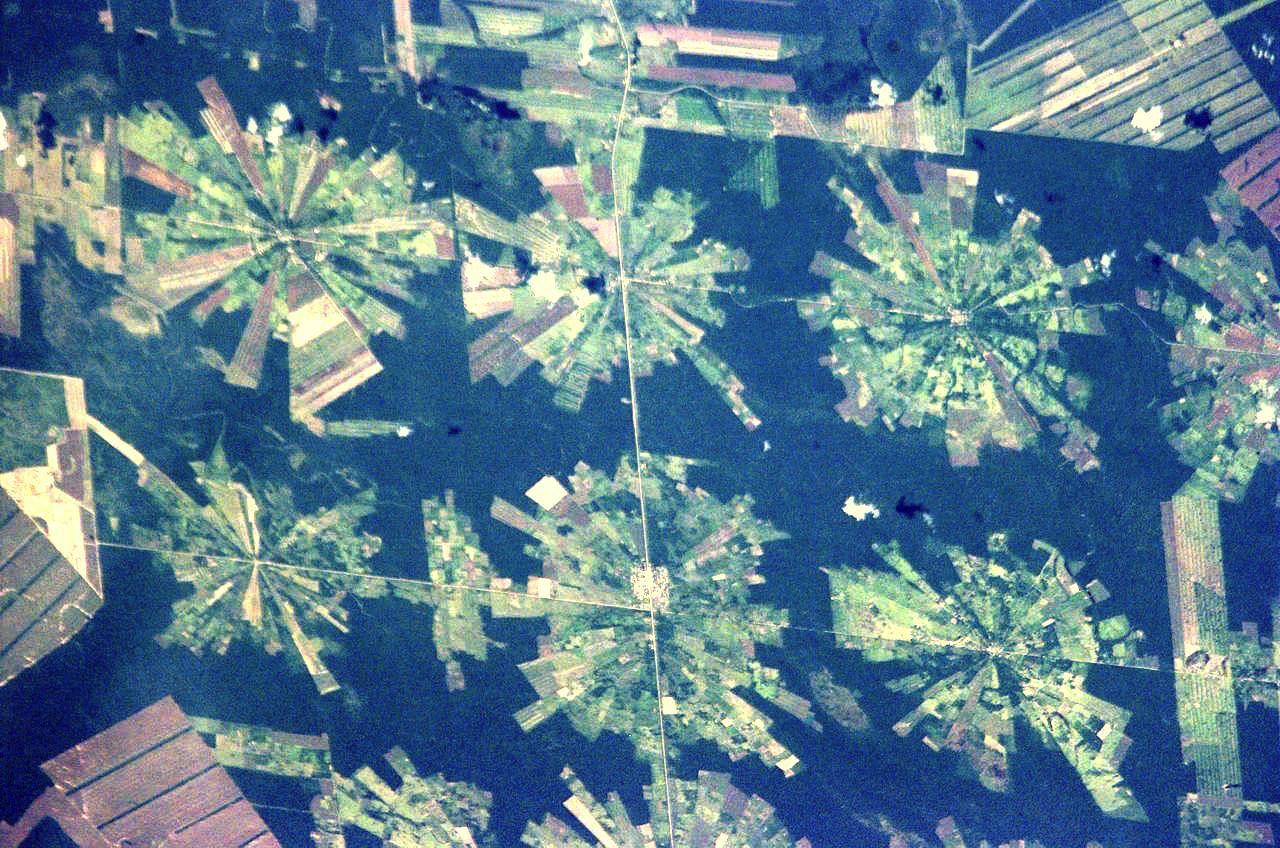
An EU study has concluded the economic impact of world forest loss exceeds the current banking crisis. The study by economists, which quantified the vital services the worlds' forests provide (absorbing carbon dioxide, cleaning water...), places the cost of the disappearing forests between $2 and $5 trillion per year.
The global economy is losing more money from the disappearance of forests than through the current banking crisis, according to an EU-commissioned study... study leader Pavan Sukhdev emphasised that the cost of natural decline dwarfs losses on the financial markets.

"It's not only greater but it's also continuous, it's been happening every year, year after year," he told BBC News. "So whereas Wall Street by various calculations has to date lost, within the financial sector, $1-$1.5 trillion, the reality is that at today's rate we are losing natural capital at least between $2-$5 trillion every year."

The report cites the advantages forests provide as basically free and points out that, without them, the services will either have to be provided through costly technology or through the increasing cost and consequences of growing climate change (which will fall disproportionally upon the world's poor).

"Times have changed," Sukhdev explained, "almost three years ago, even two years ago, their [governments and business] eyes would glaze over. Today, when I say this, they listen."

Several countries have begun efforts toward forest conservation. Ecuador has gone so far as to enact laws that proclaim their trees and water have specific rights to life. Continued...

FEATURE

John McCain's Missed Opportunity


AnswerTips-Enabled

John McCain missed the single greatest opportunity to address his most dangerous supporters directly and to repudiate their threats of violence after Senator Obama brought up the threats in the debate. McCain chose not to do so, calling them "fringe" while lauding ALL his supporters as "patriotic."

This came after Senator John McCain made a point during the debate that Barack Obama should repudiate John Lewis' Wallace comparison, which Senator Obama had done already, while pointing out that Lewis' concern about violence, given the congressman's first hand experience, was a valid consideration.


Senator McCain was not impressed. Nor was he impressed when Senator Obama directly brought up the vitriol from McCain and Palin's rallies, citing words like "terrorist" and "kill him," which John McCain dismissed as coming from fringe supporters, after which the Republican senator went on to laud all his supporters as "patriotic Americans."

This exchange has haunted me since I saw it. Not only because of McCain's hypocrisy (demanding repudiation for something for which Senator Obama was not responsible while refusing to repudiate his own supporters' threats of violence against Obama), but because I felt connected to Barack Obama at that moment, the shared concern for both his safety and for our republic, should these "fringe" supporters that McCain/Palin have purposely fired up act on their threats.

I felt haunted, as well, because Obama's words, to me, had the ring of Martin Luther King's "I may not get to the mountaintop with you" coupled with: "here's your opportunity, John, to do the right thing."

Senator McCain missed that single greatest and likely only effective opportunity to address his supporters and say: "I know most of you, my supporters, are good Americans. For those who might feel, however, that violence is the answer, IT'S NOT. Our democracy depends on the smooth transition of power, no matter who the candidate is. You must not go there or we will lose more than just a good man. We will lose what our founders wanted our country to be."

The sin of omission. And by that omission John McCain missed the opportunity to not be held responsible should the worst happen. Hopefully (God, please) nothing will happen. But that doesn't change the fact that John McCain had the opportunity to keep it from happening and chose not to.

Senator McCain: Shame on you.

McCain's Worrisome Debate Lapse


AnswerTips-Enabled

Published on Reuters

During last night's debate, when John McCain was asked to name his order of priority for addressing heath care, energy and entitlement reform, he requested a repeat of the question in a way that matches a worrisome cognitive test.

Tom Brokaw asked John McCain to name his order of priority for addressing the three items and in which order, Senator McCain asked Brokaw to repeat the question and then replied by saying he would address all of them but did not repeat the three items back in his response.


I lost someone close to Alzheimer's Disease. During the heartbreaking progression of his disease, I watched as they performed cognitive tests, telling him items in order and asking him to repeat them back. His hesitation, attempts to answer without answering and then delayed recollection to some part of the question was eerily similar to McCain's response (which was quite different from Obama's specific answers to the actual question in which he addressed all three priorities).

Coincidence? Perhaps. But if not, it raises the question that anyone who has lost someone to Alzheimer's would ask as we know the signs and progression of this horrible disease.

From The Medical Post, April 9, 1996:

Cognitive testing can predict with 90% accuracy which patients with memory problems will go on to develop Alzheimer's disease (AD), researchers here report [...] cognitive tests had the best results. These were a delayed recall test, in which the person was taught new information and after a time delay, asked to recall it.
McCain didn't have the extra burden of time delay and he was taking notes. Despite that, he did not repeat back nor did he address the specific three items about which Brokaw had asked after he asked Brokaw to repeat them to him. There was also McCain's disdainful "that one" against Obama instead of using Senator Obama's name, which could have been a slight, as has been presented and questioned in the media.

But what if McCain, at that moment, could not recall Senator Obama's name?

I do NOT wish this diagnosis for Senator McCain. I use the term heartbreaking and Alzheimer's and all forms of dementia are just that and I sincerely hope he is not at effect of it.

But we don't know because, as Robert Greenwald of Brave New Films has pointed out, Senator McCain hasn't released his full medical records... Continued...


FEATURE

53,000 Chinese children sickened by tainted milk


AnswerTips-Enabled

by The Environmentalist Staff

China's Health Ministry announced Sunday that 53,000 children, many of them infants, have been sickened by melamine tainted milk powder. This report, which quadruples the previous estimate also warns of the possibility that the tainted milk may move beyond China:
BEIJING, China (CNN) -- The number of children sickened by suspected melamine-tainted milk products in China has more than doubled and apparently spread beyond mainland China -- raising fears that the impact of the tainted products could be more widespread that initially thought.
Melamine, which produces multiple kidney stones in infants and which was previously implicated in the mass poisoning of pet food from China, was added to the milk in an effort to skew the analyzed protien content -- the same causal relationship to the tainted pet products in 2006-2007 that resulted in so many animal deaths -- again through acute failure of the kidneys.

In September 2008 Sanlu Milk recalled all powdered milk in the north-west China's Gansu province where melamine was reported to have been used in 22 brands of infant formula, making more than 12,800 infants ill. Melamine has also been found in products produced by Yili Industrial Group Co, and Mengniu Dairy Co. As of 18 September 2008 there had been four confirmed infant deaths from the contamination of powdered milk with melamine with a number of survivors diagnosed with acute kidney failure.

Melamine may have been added to fool government quality tests after water was added to fraudulently increase the milk's volume. The adulterant melamine was added to the milk to allow the company to dilute the milk with water and circumvent government regulations, since melamine will cause a false increase in the measurement of protein by increasing the nitrogen levels in the milk. Officials estimate that about 20 percent of the dairy companies tested in China sell products tainted with melamine.

Again, this is the same contamination that occured with pet food last year. If the Chinese government knew about the history of their manufacturers adding melamine to game the protein analysis count -- with such public and disastrous consequences, how could they have allowed their manufacturers to then try the same trick with the most vulnerable human population -- the powered milk used in infant formulas? Continued...


FEATURE

John McCain's Big Lies


AnswerTips-Enabled


Published on Reuters, Chicago Sun-Times, The Huffington Post, Palm Beach Post

The disregard for the truth by the McCain campaign has produced lies so big that even those that support Senator McCain are hard-pressed to deny that they're lies.

So why the recent flood of such big lies?

While they may be meant to reach undecided voters (they'd be happy to pick them up), it seems rather a tactic to engender an angry response from Senator Obama that they can then point to and say -- see, he's angry, ergo, ipso facto, he's dangerous, different, not like you and me.

Senator Obama seems unlikely to fall into that trap. He knows how to be angry and cool at the same time and both are needed now (along with more passion, please). Not that he doesn't have a right to be angry and hot, and not just for himself, but for all of us. Because, make no mistake, it is the American people upon which this tactical fraud is being perpetrated.

And not just tactical fraud. Orwellian fraud. A hallmark of the Bush years (see: Clear Skies Act). Strong is good, weak is bad (four legs bad, two legs good...); pull up your bootstraps (unless, as Senator Obama correctly points out, you don't have boots).

An example of where Obama has condensed his message, those missing boots, because the simple and direct thought is something the American people in this world of television, Internet(s) and immediate gratification seem to require. It is a message he will have to reinforce along with finding a way to relay the passion he feels for our country to those who yearn to support him.

But that's a different and far more honorable path than McCain's choice to plow the lowest road of big lies. Which makes me question what kind of country this would be with John McCain in charge, considering those running his campaign, should he win, would likely be the same people running the government.

And yet, we are told, John McCain is a maverick.

The distortions coming from the campaign make it impossible to determine who John McCain is beyond the noise, the distractions, the decision of his campaign to present him as the alpha male in the hope that fear and uncertainty will lead a majority to identify with the aggressor rather than one they try to make out as a victim or, if he fights back, as the outsider who cannot be trusted.

Psychology. Not truth.

History can be helpful in understanding the dangers of propaganda in a time of uncertainty, war, bank failures, foreclosures, stagflation, propaganda... What would be equally helpful is the moment of reflection that every American should allow themselves, in lieu of propaganda, to ask this question:

What will my life be like four years from now?

Chris Matthews addressed that question in a recent comment:
"Suppose the energy crunch has grown to cripple the economy, we're moving products, twenty years from now, on old railroads and gas guzzling trucks. The air becomes clogged with pollution again from fossil fuels because they're all we have. India, China, Russia and Brazil are, by then, grabbing and outbidding us for resources. Our failed education system has cost us our innovative edge. We can't compete. We might even have fallen back to a second rate power, we Americans. And the young people twenty years from now and the older folks who can remember it, will look back on the fall election of 2008 that set the course for this century and see videotapes of us arguing about lipstick...lipstick.

This game that's being played is not an insult to a candidate, it's an insult to the intelligence of our democracy, which is really all we have, each of us, to decide and build a future. Our only escape from all this is to force ourselves, against all the distractions, to think through the hearts and minds of those young people who will have to live in the world we are now deciding who's to build, who's to lead us to." Continued...


FEATURE

NOAA makes it official: Extreme weather due to climate change


AnswerTips-Enabled


In a report issued by the U.S. Climate Change Science Program, a joint effort of more than a dozen government agencies which includes the National Oceanic and Atmospheric Administration (NOAA), the conclusion is that the extreme weather we've been experiencing will become both more extreme and is due to climate change.
WASHINGTON - Droughts will get drier, storms will get stormier and floods will get deeper with a warming climate across North America, U.S. government experts said in a report billed as the first continental assessment of extreme events.

Events that have seemed relatively rare will become commonplace, said the latest report from the U.S. Climate Change Science Program, a joint effort of more than a dozen government agencies.
This report has raised questions by those who point to this year's cooler temperatures in many parts of the world. That issue was addressed by the British Met Office's 2008 temperature prediction which cited an increased 2008
La Niña event; a cooling of a Pacific current - a periodic anomaly that was covered in this report: What's with the Weather? The La Niña-Tornado Connection.

Specific project
ions from the Climate Sciences report include:

* Abnormally hot d
ays and nights, along with heat waves, are very likely to become more common.
* Cold nights are very likely to bec
ome less common.
* Sea ice extent is expected to continue to decrease and may even disappear in the Arctic Ocean in summer in coming decades.

* Precipitatio
n, on average, is likely to be less frequent but more intense.
* Droughts are likely to become more frequent and severe in some regions.
* Hurricanes will likely have increased precipitation and wind.

* The strongest
cold-season storms in the Atlantic and Pacific are likely to produce stronger winds and higher extreme wave heights... Continued...

Hurricane Gustav strengthens over the Gulf


AnswerTips-Enabled


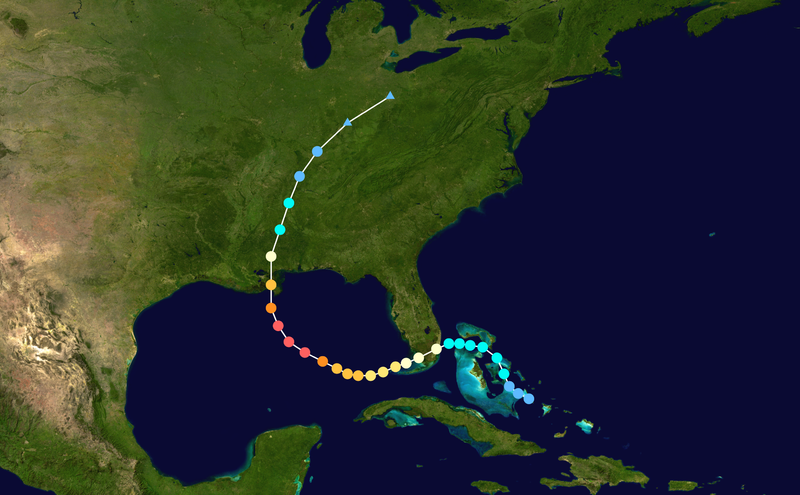
On the third anniversary of Katrina, Gustav is projected to become a potential category 5 hurricane as it passes over the warmer Gulf waters on a path that includes New Orleans as a possible landfall target.

Gustav churns toward the U.S. Gulf Coast on a similar path to Katrina (see below). Residents in its projected path have been warned to either evacuate or to prepare to do so. New Orleans has made the evacuation order mandatory.

The infamous SuperDome (now renamed) is not intended as a shelter this time. The Humane Society reminds residents to take their pets with them; not to leave them as so many were left with Katrina and/or to stay behind with them, if they are headed to buses and shelters provided for evacuation. For buses that are headed to emergency flights, there are some limitations on pets. Citizens should check with pet shelters about their animals if that is their only way out for other modes of transportation that have been instructed to allow evacuees' pets to accompany them.

Offshore oil rigs have been evacuated, as well and oil and gas prices in the region have risen in anticipation of the possible shortfalls (and possible gauging).

With the cone of possible landfall sites still in flux (<--see graph), it is uncertain exactly where Gustav will strike. The damage in the Caribbean thus far, over 80 killed and many more left homeless, points to a severe event.

Mayor Ray Nagin of New Orleans, in issuing the mandatory evacuation order, warned his residents to 'be scared' and referred to Gustav as "The Storm of the Century."

The high temperature of the Gulf waters means it is likely that the impact could be even se
vere to catastrophic, depending on where it hits, the upper atmosphere wind shear patterns and how much time it has to draw strength from the warmed gulf waters.

Two more storms are building behind Gustav... Continued...


FEATURE

A Filmmaker's 'Fields of Fuel'


AnswerTips-Enabled

Published on Reuters

Filmmaker Greg Reitman's first-hand account of the journey that led to his Sundance Award winning feature documentary, FIELDS OF FUEL.

Four years ago, I met environmentalist and filmmaker Josh Tickell at the Temecula Valley Film festival where we had both been invited to showcase our films. At the time, I had just finished my first documentary film "Hollywood’s Magical Island-Catalina," which won the Audience Award and was syndicated nationally on PBS. while Josh was finishing the festival tour of his short film, "The Veggie Van Voyage."

At the festival, we showcased and marketed our films together and began our friendship as I became truly amazed at Josh Tickell’s devotion to the environment and his cause towards cleaner energy. After twelve months of discussions about politics, family, religion, and, of course, the environment, Josh finally convinced me to join forces with him in producing the feature documentary film, ‘Fields of Fuel’:


I had no idea what I was getting involved with or the impact that this film would ultimately have worldwide. Over the next three years, we made numerous trips. Our first was to Portugal where we filmed the ‘Peak Oil’ Conference and interviewed experts like Colin Campbell and Mathew Simmons. These experts talked convincingly about Peak Oil and the reluctance of governments to accept this idea. I remember, in particular, Mathew Simmons' comment that, if the world were to understand that there was not enough oil to meet demand (Peak Oil), the resultant impact on the world's markets and the potential for escalating chaos could be exponential.

We flew from Portugal to Germany. The MAN Museum was a top priority, as Josh wanted to document the story of Rudolf Diesel and his diesel engine. Going through the archive and seeing the first diesel engine was electrifying. Even
more electrifying was the revelation that the engine was designed to run on vegetable oil,
– a fact which had been pushed under the rug.

When we returned to America, Josh was ready to take his historical Veggie Van (the subject of his short film) back on the road. We gathered our supplies and coordinated the trip so that each stop would allow for the van to run on biodiesel (i.e. used vegetable oil) and soon, we were on the road with the mission to meet and film the legendary music singer/songwriter Willie Nelson
... Continued...

FEATURE

James Hansen's Travel Report


AnswerTips-Enabled


Dr. James Hansen of NASA's Goddard Institute for Space Studies has returned from his recent trip abroad with a comprehensive report on the need to define a global climate strategy:
Geophysical boundary conditions must be considered in defining a global climate strategy. The Kyoto Protocol and proposed extensions are an exercise in self-delusion and a prescription for global disaster.
In July, Dr. Hansen sent a letter to the Prime Minister of Japan, host of G8 conference, warning that we'd exceeded safe C02 levels (safe being below 350 ppm; current levels exceed 385 ppm). His new report begins with a recounting of his meeting with the German Minister of the Environment, Sigmar Gabriel, which included a warning about the use of coal-fired plants:
I am grateful for Minister Gabriel’s generosity with his time, and I have no doubt about his sincerity in dealing with climate change. However, we did not come to a common understanding about the implications of geophysical boundary conditions on fossil fuels. The stark policy implication of the data, I assert, is urgency for a moratorium on coal-fired power plants.
Fig. 1. (a) carbon sources, and (b) CO2 scenarios if coal emissions are phased out linearly over 2010-2030 period; return below 350 ppm can be hastened via reforestation and carbon sequestration in soil, and further via capture of CO2 at gas-fired power plants.

The report continues with the United Kingdom and offers Hansen's concerns about the problems inherent with geophysical boundaries while attempting to define a global strategy and his concern about the countries' position on carbon sequestration and "clean coal." Continued...


1 [2] read more =>

FEATURE

Invasive Species Threat To US Waters


AnswerTips-Enabled

by Patriot Daily

Published on Reuters

US waters are threatened by invasive species that may spread deadly diseases to people and wildlife, impair water supply infrastructure, harm ecosystems, cause twice the annual economic damage of all natural disasters, and are linked to half of the decline of endangered species.

When large ships are not transporting cargo, the ships pump coastal waters and all the living organisms into their ballast tanks while at foreign ports to obtain balance. When closer to our shores, the ballast water is exchanged with ocean waters, but the exchange does not eliminate the invasive species, which then are discharged into our waters. The 9th Circuit has directed the EPA to regulate this pollution while Congress has reached an impasse on legislation.

Ballast water is needed to provide balance for changes in the ship's weight. The problem is that the ballast water contains
thousands of invasive species which are then carried in the ballast tanks of the ship. When a ship reaches the next port, changes in the cargo load may require changes in ballast, and thus the ballast water is discharged into a new ecosystem. When the ships return to the US, then the invasive critters are released into US waters. Each year, "more than 21 billion gallons of ballast water" is discharged into US waters.

The invasive species range from "microscopic bacteria to weeds, fish, crabs and mussels." Each day, more than 10,000 marine species "hitch rides around the globe in the ballast water of cargo ships."

These invasive species then create enormous problems for our water supplies, environment and people.

They can spread disease. A 2001 EPA report disclosed that a cholera bacteria was "possibly" released by a Chinese freighter in Latin America, which caused the deaths of 10,000 people. Ships from Latin America then imported this cholera in their ballast tanks to the Mobile, Alabama port. Fortunately, the cholera bacteria was discovered in oyster and finfish samples so that no one was killed in the US.

Deadly diseases may be spread to wildlife as well as people. For example, it is believed that ship ballast water likely transported Viral Hemorrhagic Septicemia (VHS), an invasive species virus, to US waters, resulting in bloody, hemorrhaging "fish kills involving more than 30 species, including valuable sport fish such as salmon, trout, walleye, muskie, bass and perch."


They clog the water pipes and infrastructure. For example, two decades ago, little quagga and zebra mussels hitched a ride from Eastern Europe to the Great Lakes. In 6 years, the invasive species caused $500 million in damages to the regional economy by clogging water intake pipes. Last year, the mussels spread to Lake Mead in Nevada and on to Southern California, where one water district projects it will cost at least $15 million a year to try to extinguish aqueduct infestations.

They threaten native species: Invasive species are a "major or contributing cause of declines for almost half the endangered species" in the US. The absence of natural predators allows the invasive species to "multiply rapidly and quickly take over an ecosystem."


The threat by invasive species is enhanced because they are "almost impossible to remove" and thus scientists, industry officials and land managers have concluded that "invasive species are one of the most serious, yet least appreciated, environmental threats of the 21st century." Continued...


FEATURE

Oil prices were manipulated, government commission charges


AnswerTips-Enabled


The Commodity Futures Trading Commission, the agency charged with "ensuring the integrity of the futures & options market," has accused the trading firm, Optiver Holding, of manipulating the prices of crude oil, heating oil and gasoline futures on the New York Mercantile Exchange, the first complaint announced since their recent investigation into the manipulation of oil prices began:

Washington, DC – The U.S. Commodity Futures Trading Commission (CFTC) announced today its case against Optiver Holding BV, two of its subsidiaries, and three employees, charging them with manipulation and attempted manipulation of New York Mercantile Exchange (NYMEX) Light Sweet Crude Oil, New York Harbor Heating Oil, and New York Harbor Gasoline futures contracts during March 2007.

The CFTC filed the civil enforcement action in the United States District Court for the Southern District of New York against Optiver Holding BV, a global proprietary trading fund headquartered in the Netherlands, and two subsidiaries – Optiver US, LLC (Optiver), a Chicago-based corporation, and Optiver VOF, a Dutch company. The complaint also names defendants Christopher Dowson (head trader of Optiver), Randal Meijer (head of trading and supervisor of Optiver and Optiver VOF) and Bastiaan van Kempen (Chief Executive Officer of Optiver).

In May, under the backdrop of record oil prices and calls from legislators to crack down on speculative oil trading and market manipulation, the CFTC announced a wide-ranging probe into oil price manipulation. The agency says it has dozens of investigations ongoing.

The CFTC began their probe into the manipulation of oil prices amid record prices increases in May. They say they have dozens of investigations underway. This was the first announced charge against a specific company. The implication is that there are more to follow.
According to the complaint, the defendants employed a manipulative scheme commonly known as “banging” or “marking”’ the close. “Banging the close” refers to the practice of acquiring a substantial position leading up to the closing period, followed by offsetting the position before the end of the close of trading for the purpose of attempting to manipulate prices.


[1] [2] read more =>

EPA: Global Warming Is Endangering Americans


AnswerTips-Enabled

by Patriot Daily
Published on Reuters

EPA administrator Stephen Johnson informed the Bush Administration last December that there is "compelling and robust" evidence that our recent temperature increases are caused by man-made greenhouse gas emissions which endanger the American people:

WASHINGTON — - The head of the Environmental Protection Agency told the Bush administration in December that high levels of man-made heat-trapping gases are causing global warming and endanger the American people, Sen. Barbara Boxer, D-Calif., said Thursday after she reviewed the EPA finding, which has not been made public.

The White House declined to open the email with the warning contained in a 38-page document because:

The document is important because the Supreme Court ruled last year that if the EPA administrator finds greenhouse gases endanger the public, then the government must regulate them — a move the administration opposes.
Last week, the EPA issued a 283-page report which details how global warming endangers Americans. The EPA Inspector General issued another report that the Bush Administration's voluntary programs to reduce greenhouse gas emissions "have limited potential."

The EPA report on global warming impacts explains how climate change endangers us all:

1. Temperature: Heat waves will increase while cold days and nights will become less frequent. The EPA reports a predicted increase in temperature-related morbidity and mortality, which will affect everyone. During 1979-2002, 4,780 people died from heatwaves, although the report acknowledges that the figures are underestimated because the death certificate may not always list heat as the cause of death. Moreover, heat waves may cause death by exacerbating chronic health conditions, such as cardiovascular, renal, respiratory diseases, diabetes, and nervous system disorders.

While everyone will be affected by temperature extremes, certain subpopulations face an added risk: Children, older adults, impoverished populations, people with chronic medical conditions or compromised immune systems, people with mobility and cognitive constraints, outdoor workers, city dwellers, the less educated, people without access to air conditioning and recent migrants and immigrants.

One factor in heat-related mortality is age. The number of Americans over age 65 is projected to reach 13% by 2010 and 20% by 2030 or over 50 million people. The EPA reports that older Americans are more "vulnerable" to higher temperatures, which means that "heat-related mortality could increase."

City dwellers will be impacted by the urban heat island effect which will increase city temperatures by 2-10 degrees more than suburban and rural areas due to "absorption of heat by dark paved surfaces and buildings, lack of vegetation and trees, heat emitted from buildings, vehicles, and air conditioners, and reduced air flow around buildings."

The plan to reduce heat-mortalities includes "heatwave early warning systems, urban design to reduce heat loads, and enhanced services during heatwaves."

2. Extreme Climate Events: Our weather will include extreme climate events, including hurricanes, floods, tornadoes, blizzards, windstorms, droughts, wildfires, heat waves, and heavy downpours. Climate change may increase hurricane wind speeds, rainfall intensity and storm surge levels while sea levels will rise, causing coastal and riverine floods.

The gravity of this report is illustrated by the EPA's acknowledgment of the role of climate change in increased frequency and intensity of hurricanes, indicating that, while further studies can be productive, it is time to stop debating causation and move toward taking action.


[1] [2] read more =>

FEATURE

Bush: "Goodbye from the world's biggest polluter"


AnswerTips-Enabled


George W. Bush's farewell to his G8 counterparts would have sounded like an accusation by environmentalists, had it not come from the U.S. President who made this statement to the stunned G8 leaders:

President George Bush signed off with a defiant farewell over his refusal to accept global climate change targets at his last G8 summit.

As he prepared to fly out from Japan, he told his fellow leaders: "Goodbye from the world's biggest polluter."

President Bush made the private joke in the summit's closing session, senior sources said yesterday. His remarks were taken as a two-fingered salute from the President from Texas who is wedded to the oil industry.
Bush's "in your face" farewell was presented both after the outgoing U.S. president blocked specific numerical targets in the G8's endorsement of a cut in greenhouse gases and after Dr. James Hansen of NASA's Goddard Space Science's Institute announced to the G8 that the atmosphere had exceeded safe C02 limits (safe being less than 350ppm; the atmosphere at 385 and rising).

This also comes as the presumptive Republican nominee, John McCain, while touting his own green "credentials," aligns with oil industry donations in return for his support of offshore drilling; something even McCain acknowledges will not lower gas prices for up to seven years.

And as McCain's (now under the bus) economic adviser, former Texas Senator, Phil Gramm -- whose initial support of the "Enron loophole" while his wife served on the Enron Board not only led to California's manufactured energy crisis, but was what opened the door for oil speculators to push up the price of gas, and whose involvement with UBS Swiss Bank coincided with his push to deregulate the mortgage industry, leading to he current sub-prime housing crisis -- states that the economic woes caused by his own actions are: "whining" by the American people and a "mental" recession.

To which Barack Obama replied:

[1] [2]

FEATURE

Australia's Climate Change Challenge


AnswerTips-Enabled


Published on Reuters

Australia, the world's driest continent, is in danger of drying beyond its ability to sustain its agriculture. So says economist Ross Garnaut, who has warned that, should global warming go unchecked, Australia could see a 50% reduction in irrigated agriculture by 2050.
THE weight of scientific evidence tells us that Australians are facing risks of damaging climate change. The risk can be substantially reduced by strong and early action by all major economies.

Without that action, it is probable that Australians, over the 21st century and beyond, will experience disruption in their prosperity and enjoyment of life, and to longstanding patterns in their lives.
Garnaut went on to write that "effective international action is necessary if the risks of dangerous climate change are to be held to acceptable levels, but deeply problematic." He cites the fact that international cooperation is the minimum requirement for the resolution to a global crisis. He refers to it as a "prisoners' dilemma" where each individual country benefits from self-interest, trying to do less of the mitigation itself, while others do more.

"If all countries act on this basis, without forethought and cooperation, there will be no resolution of the dilemma. We will all judge the outcome, in the fullness of time, to be insufficient and unsatisfactory."

Garnaut is calling for one of the most ambitious carbon trading schemes yet proposed, set to start by 2010. He says that Australia's heartland cannot be preserved without this action. He wants the trading regime to be broad-based, to include both energy and transport, earning complaints from business groups who say the scheme could put them at a disadvantage to the rest of the world (ergo: prisoners' dilemma) and have warned of blackouts and bankruptcies.

Prime Minister Kevin Rudd's government campaigned on the commitment to mitigate climate change and, as such, are expected to institute some form of carbon trading, the scope of which is to be determined. The Garnaut report is expected to be part of that review.

The Rudd government has several other considerations; political, economic, scientific, environmental...

[1] [2]

FEATURE

Permafrost Threatened by Retreat of Arctic Sea Ice


AnswerTips-Enabled


Published on Reuters, Huffington Post, IBS, USAToday

A new study by the National Snow and Ice Data Center and the National Center for Atmospheric Research has warned that the integrity of carbon and methane sequestering permafrost is threatened by the rapid retreat of Arctic Sea Ice. This comes at the same time as warnings that this summer may see the first ice-free North Pole for the first time in recorded history.


The rate of climate warming over northern Alaska, Canada, and Russia could more than triple during extended episodes of rapid sea ice loss, according to a new study from the National Center for Atmospheric Research (NCAR) and the National Snow and Ice Data Center (NSIDC). The findings raise concerns about the thawing of permafrost, or permanently frozen soil, and the potential consequences for sensitive ecosystems, human infrastructure, and the release of additional greenhouse gases.

“The rapid loss of sea ice can trigger widespread changes that would be felt across the region,” said Andrew Slater, NSIDC research scientist and a co-author on the study, which was led by David Lawrence of NCAR. The findings will be published Friday in Geophysical Research Letters.

Last summer, Arctic sea ice extent shrank to a record low. From August to October last year, air temperatures over land in the western Arctic were also unusually warm, reaching more than 4 degrees Fahrenheit (2 degrees Celsius) above the 1978-2006 average. This led the researchers to question whether the unusually low sea ice extent and warm land temperatures were related.

The report's findings show a link between rapid sea ice loss and an increased rate of global warming, potentially moving up to 900 miles inland and in areas where permafrost is already at risk, i.e. central Alaska, where periods of abrupt sea ice loss could lead to uncontrolled soil thaw.
Thawing permafrost may have a range of impacts, including buckled highways and destabilized houses, as well as changes to the delicate balance of life in the Arctic...

EPA Documents Bombshell: EPA Administrator's global warming warning withheld by White House


AnswerTips-Enabled


Published on Reuters, Atlanta Journal-Constitution, Huffington Post, Chicago Sun-Times, Fox News, IBS


The House Select Committee on Energy Independence and Global Warming subpoenaed documents that reveal EPA Administrator, Stephen Johnson, had sent regulatory recommendations to the White House last year in which he unequivocally stated that global warming was occurring and that vehicle emissions were a danger to public welfare.

WASHINGTON (June 24, 2008) – The Environmental Protection Agency was on its way towards finding global warming emissions to be a danger to public welfare, and that these emissions should be regulated in vehicles and fuels, according to a review of subpoenaed global warming documents by the Select Committee on Energy Independence and Global Warming. The review of the documents follows a lengthy process of negotiation with the EPA and the White House, which started in January of 2008, and brings into serious question the administration’s u-turn on regulating global warming emissions.

The documents are the draft regulatory recommendations from December 5 and December 14 of 2007, and were sent to the White House and to the National Highway Traffic Safety Administration (NHTSA) for approval before reports indicate all work was stopped on the recommendations. The White House is now in the process of completing an Advanced Notice of Proposed Rulemaking (ANPR), which would be a step backwards in what the Select Committee has found to be an already advanced process towards regulating global warming emissions.

What makes this a bombshell: This is the same Stephen Johnson who denied California's request for higher emission standards waiver, stating that the lower Federal standard was enough -- the subject of an ongoing lawsuit between the EPA and at least 18 states plus environmental groups, resulting in a (different) subpoena for documents and eyewitness testimony by Henry Waxman (D-CA) to determine the extent of President Bush's intervention to lower those standards.

President Bush invoked executive privilege last week to avoid answering that subpoena.

“Th
is administration has shown its contempt for Congress, its contempt for the rule of law, and this administration’s handling of the Massachusetts v. EPA decision has shown its contempt for science,” said [committee] Chairman [Edward] Markey (D-MA). “The president has a short amount of time to alter his legacy as running the most environmentally-unfriendly administration in history, and he can start by listening to his own climate scientists and take action on global warming.”

Among the findings in the documents:

* EPA Administrator Stephen Johnson determined that man-made global warming is unequivocal, the evidence is both compelling and robust, and the administration must act to prevent harm rather than wait for harm to occur before acting.

* EPA found that global warming risks include severe heat waves, sea level rise, reduced availability of water, increased wildfire and insect outbreaks, an increase in heavy precipitation events, an increase in regional ground-level ozone pollution, and changes in the range of vector-borne diseases.

* EPA proposed that regulations to reduce greenhouse gas emissions from motor vehicles be implemented in order to achieve the equivalent of a 35 mpg car and light truck fleet average by 2018 (with the car fleet averaging 38.4 mpg by 2018 and the truck fleet averaging 29.5 mpg by 2017).

* When EPA used the EIA 2007 high gasoline price projections of $2.75 in 2017 to $3.20 in 2030 to calculate standards, it found that the car fleet could achieve a standard of 43.3 mpg by 2018 and light trucks could achieve a standard of 30.6 mpg by 2017.

This comes just after President Bush evoked executive privilege to withhold information on his intervention in the EPA's lowering of rural and California smog standards...

[1] [2]

FEATURE

President Bush Claims Executive Privilege in EPA Interference Investigation


AnswerTips-Enabled

Published on Reuters, The Huffington Post

President Bush has claimed executive privilege as his reason for denying Henry Waxman's House Oversight and Government Reform Committee access to documents that would prove whether the president pressured the EPA to lower smog standards earlier this year:
President Bush has asserted executive privilege over thousands of pages of documents that would show whether the President and his staff complied with the Clean Air Act in overruling EPA Administrator Stephen Johnson on important environmental decisions.
The Bush Administration sent notice to Waxman 15 minutes before his committee was to vote on whether to compel the EPA administrator and a White House budget official to testify as to President Bush's involvement. Waxman's reaction: "I have a clear sense that their assertion of this privilege is self-serving and not based on the appropriate law and rules," came as he canceled the vote.

This latest salvo between Congress and the recalcitrant White House is part of an ongoing investigation into President Bush's intervention into smog standards (amidst refusals to supply officials for testimony in other matters - i.e. Karl Rove in the Valarie Plame matter):
"Never before has a president personally intervened at the 11th hour, exercising political power at the expense of the law and science, to force EPA to accept weaker air quality standards than the agency chief's expert scientific judgment had led him to adopt," said John Walke, clean air director at the Natural Resources Defense Council, a private advocacy group. "It is unprecedented and an unlawful act of political interference."
This comes as ongoing pressure and interference by Bush Administration officials was confirmed by EPA Scientists:
The Union of Concerned Scientists has released an online survey of thousands of EPA scientists in which over half the scientists cited political interference in their work and their findings.
"I don't think we've had a situation like this [claim of executive privilege] since Richard Nixon was president when the president of the United States may have been involved in acting contrary to law, and the evidence that would determine that question for Congress in exercising our oversight is being blocked by an assertion of executive privilege," Waxman stated.

Waxman (D-CA) said he will review Attorney General
Mukasey's claim of right to executive privelige before deciding upon his response. He added that he would not stop in his efforts to require the head of the EPA, Stephen Johnson, and a White House Management and Budget official, Susan Dudley, to testify as to the president's interference in lowering the smog standard to a lesser level than recommended by experts, along with his refusal to comply with the committee's request in what has been described as an ongoing pattern of "an overly broad use of executive privilege."

[1] [2]

IN THIS ISSUE