Loading...
HOME
POLITICS
CLIMATE
BUSINESS
SCIENCE
WORLD
HISTORY
LIFESTYLE
EDITORIAL
RESOURCES
CONTACT
Showing posts with label Barbara Boxer. Show all posts

FEATURE

Senate Climate Bill: Two Futures, One Choice


AnswerTips-Enabled


Now that John Kerry and Barbara Boxer have introduced their climate bill in the United States Senate, this fall will be all about the dogs. To get the 60 votes they need to pass a bill, progressive Democrats will be trying to turn Blue Dog Democrats into Green Dog Democrats.

Welcome to the dog days of autumn. Watch for progressives to offer milk bones, kibbles and bits to coax their more conservative colleagues into commitments that conscience alone should be sufficient to dictate.

The challenge for leaders in the Senate, as it was in the House, will be to prevent the climate bill from being negotiated into something far less than required to reinvent the American economy and reverse our greenhouse gas emissions, and to do both quickly.

Whether Senate leaders succeed in producing public policy that averts climate disaster will depend in large part on how they frame the debate. Continued...

FEATURE

EPA: Global Warming Is Endangering Americans


AnswerTips-Enabled

by Patriot Daily
Published on Reuters

EPA administrator Stephen Johnson informed the Bush Administration last December that there is "compelling and robust" evidence that our recent temperature increases are caused by man-made greenhouse gas emissions which endanger the American people:

WASHINGTON — - The head of the Environmental Protection Agency told the Bush administration in December that high levels of man-made heat-trapping gases are causing global warming and endanger the American people, Sen. Barbara Boxer, D-Calif., said Thursday after she reviewed the EPA finding, which has not been made public.

The White House declined to open the email with the warning contained in a 38-page document because:

The document is important because the Supreme Court ruled last year that if the EPA administrator finds greenhouse gases endanger the public, then the government must regulate them — a move the administration opposes.
Last week, the EPA issued a 283-page report which details how global warming endangers Americans. The EPA Inspector General issued another report that the Bush Administration's voluntary programs to reduce greenhouse gas emissions "have limited potential."

The EPA report on global warming impacts explains how climate change endangers us all:

1. Temperature: Heat waves will increase while cold days and nights will become less frequent. The EPA reports a predicted increase in temperature-related morbidity and mortality, which will affect everyone. During 1979-2002, 4,780 people died from heatwaves, although the report acknowledges that the figures are underestimated because the death certificate may not always list heat as the cause of death. Moreover, heat waves may cause death by exacerbating chronic health conditions, such as cardiovascular, renal, respiratory diseases, diabetes, and nervous system disorders.

While everyone will be affected by temperature extremes, certain subpopulations face an added risk: Children, older adults, impoverished populations, people with chronic medical conditions or compromised immune systems, people with mobility and cognitive constraints, outdoor workers, city dwellers, the less educated, people without access to air conditioning and recent migrants and immigrants.

One factor in heat-related mortality is age. The number of Americans over age 65 is projected to reach 13% by 2010 and 20% by 2030 or over 50 million people. The EPA reports that older Americans are more "vulnerable" to higher temperatures, which means that "heat-related mortality could increase."

City dwellers will be impacted by the urban heat island effect which will increase city temperatures by 2-10 degrees more than suburban and rural areas due to "absorption of heat by dark paved surfaces and buildings, lack of vegetation and trees, heat emitted from buildings, vehicles, and air conditioners, and reduced air flow around buildings."

The plan to reduce heat-mortalities includes "heatwave early warning systems, urban design to reduce heat loads, and enhanced services during heatwaves."

2. Extreme Climate Events: Our weather will include extreme climate events, including hurricanes, floods, tornadoes, blizzards, windstorms, droughts, wildfires, heat waves, and heavy downpours. Climate change may increase hurricane wind speeds, rainfall intensity and storm surge levels while sea levels will rise, causing coastal and riverine floods.

The gravity of this report is illustrated by the EPA's acknowledgment of the role of climate change in increased frequency and intensity of hurricanes, indicating that, while further studies can be productive, it is time to stop debating causation and move toward taking action.


[1] [2] read more =>

FEATURE

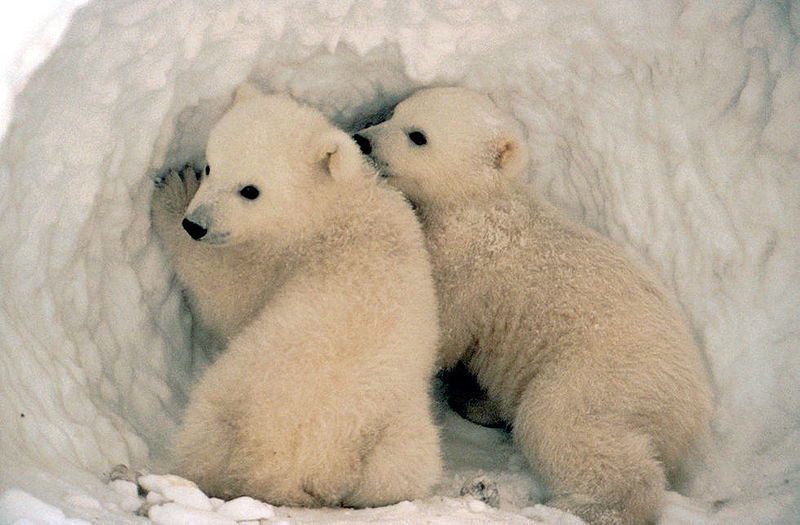
Interior Secretary no-show at Senate Polar Bear Hearing


AnswerTips-Enabled


The Bush Administration's Interior Secretary, Dirk Kempthorne, was a no-show at last Wednesday's Senate Environmental and Public Works Committee hearing, chaired by Barbara Boxer, on the listing of the polar bear as an endangered species.
"This listing is months overdue, in violation of the Endangered Species Act," the California Democrat said at the hearing of the Senate Environmental and Public Works Committee.

The deadline for a decision was Jan. 9. Conservation groups petitioned to list polar bears as threatened more than three years ago because their habitat, sea ice, is shrinking from global warming.

In a letter to Boxer, Kempthorne said he "respectfully" declined her invitation to appear at the hearing, since he is a named defendant in a lawsuit over the polar bear listing filed by an environmental group.
The hearing did receive testimony from witnesses on climate change projections, emissions, and the potential for oil spills to further impact the polar bear's ability to survive amidst declining sea ice due to warming.

Critics to listing the polar bear as an endangered species include the Interior Department, after its subsidiary, the Fish and Wildlife Service, requested it be added on January 7, 2008. The Interior Department raised the concern that the Fish and Wildlife Service does not have the resources to handle the duties that would arise with the change in designation. Other critics, according to this
MSNBC article, have raised a more direct concern that listing the polar bear would limit oil and gas exploration in the Arctic.
"It's a professional wildlife agency, not an air-regulating agency," said William Horn, an attorney and former assistant Interior secretary for Fish and Wildlife in the Reagan administration.
To which, Senator Boxer replied: "...sadly, despite the peer-reviewed scientific evidence; despite the opinions of scientists in our own government; despite the fact that we have a strong, successful law to protect imperiled species — the Endangered Species Act — the Bush Administration continues to break the law by failing to make a final decision to list the polar bear."

FEATURE

EPA sued (again) by 18 states over greenhouse gas emission standards


AnswerTips-Enabled

by Janet Ritz,
Martin Muse

Cross-posted on Reuters

Eighteen states, two cities and ten environmental groups filed suit Wednesday against the EPA's refusal to issue a decision on emissions regulation. The filing asks the federal court to compel the EPA to act within 60 days, at which time, further action may be taken.

WASHINGTON (Reuters) - Eighteen states sued the Environmental Protection Agency on Wednesday for failing to limit greenhouse gas emissions from new cars and trucks, one year after the Supreme Court ruled that the agency had the power to do so.

The suit seeks EPA's response to the high court's April 2, 2007, ruling, a landmark decision seen as a sharp defeat for the Bush administration's policy on climate change.

This is another in a string of lawsuits that have been filed by various states to attempt to compel the EPA to take a position on greenhouse gas emissions, after the EPA's refusal to do so prevented California (and the other states that would use California's regulation as a standard) from lowering their own limit in a state regulation.

The plaintiffs include: Arizona, California, Connecticut, Delaware, Illinois, Iowa, Maine, Maryland, Massachusetts, Minnesota, New Jersey, New Mexico, New York, Oregon, Pennsylvania, Rhode Island, Vermont, Washington, the District of Columbia, the city of New York, the city of Baltimore, the Sierra Club and nine other environmental groups.


The EPA has also received a subpoena from Congress to turn over their correspondence and other paperwork after reports came to light that
President Bush had personally intervened on the decision to lower a key greenhouse gas regulation. The head of the EPA, Stephen Johnson, has also been accused of foot dragging by members of Congress...

IN THIS ISSUE