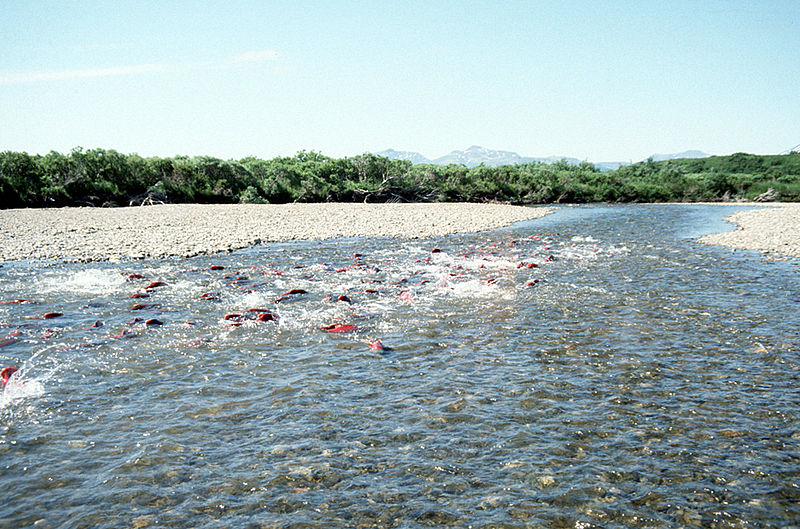
The World Wildlife Fund, in conjunction with the Zoological Society of London, has released a report that concludes more than one in four of all wildlife species has been lost since 1970.
Populations of land-based species fell by 25%, marine by 28% and freshwater by 29%, it says. Humans are wiping out about 1% of all other species every year, and one of the "great extinction episodes" in the Earth's history is under way, it says. Pollution, farming and urban expansion, over-fishing and hunting are blamed.
This level of extinction has not been seen since the age of the dinosaurs. The Living Planet Index compiled by the Society with the World Wildlife Fund cites marine species as the most impacted:Some of the worst hit are marine species which saw their numbers plummet by 28% in just 10 years, between 1995 and 2005. Populations of ocean birds have fallen by 30% since the mid 1990s, while land-based populations have dropped by 25%. Among the creatures most seriously affected have been African antelopes, swordfish and hammerhead sharks. Another, the baiji - or Yangtze River Dolphin - may have been lost altogether.
"Reduced biodiversity means millions of people face a future where food supplies are more vulnerable to pests and disease and where water is in irregular or short supply," said James Leape, World Wildlife Fund...
FEATURE
Wildlife numbers plummeting: "A great extinction is underway"
Posted by
The Environmentalist
at
5/16/2008 03:34:00 AM
Labels: Animals, Climate Change, Endangered Species, Environment, Fauna, Fish and Wildlife Service, Global Warming, Illegal Wildlife Trade, Reuters, Wildlife, WWF
SUBSCRIBE TO: POSTS (RSS)
FEATURE
Polar Bears finally on the endangered list
“While the legal standards under the ESA [Endangered Species Act] compel me to list the polar bear as threatened, I want to make clear that this listing will not stop global climate change or prevent any sea ice from melting," Interior Secretary Dirk Kempthorne says in a statement.The move requires the government to protect the species and to take measures to help the bears survive, an important consideration and the likely reason for the delay, as this is the first time a species has been listed due to climate change.
"Any real solution requires action by all major economies for it to be effective. That is why I am taking administrative and regulatory action to make certain the ESA isn’t abused to make global warming policies.”
"This is a profound acknowledgment of the threat not only to polar bears but to the entire Arctic ecosystem," said Andrew Wetzler of the Natural Resources Defense Council. "It is going to provide important protection for polar bear populations."
Dirk Kempthorne's response made it clear that he did not want to see this decision lead to a broader effort to curtail global warming...
Posted by
The Environmentalist
at
5/14/2008 12:24:00 PM
Labels: Animals, Climate Change, Dirk Kempthorne, Endangered Species, Environment, Global Warming, Interior Department, NRDC, Polar Bear, Politics, Reuters, Science, Sierra Club, USFWS, Wildlife
SUBSCRIBE TO: POSTS (RSS)
FEATURE
Honeybees at unsustainable levels: over one-third lost
SAN FRANCISCO, California (AP) -- A survey of bee health released Tuesday revealed a grim picture, with 36.1 percent of the nation's commercially managed hives lost since last year. Last year's survey commissioned by the Apiary Inspectors of America found losses of about 32 percent.The University of Pennsylvania has received emergency grants of ~$80,000 to investigate the problem. These funds have been supplemented by up to a $250,000 grant from Haagen-Dazs Ice Cream Company to be split between the university and U.C. California Davis. The ice cream company relies upon honeybees for pollination of plants that provide many of the natural flavors used in their products.
As beekeepers travel with their hives this spring to pollinate crops around the country, it's clear the insects are buckling under the weight of new diseases, pesticide drift and old enemies like the parasitic varroa mite. (snip)
About 29 percent of the deaths were due to colony collapse disorder, a mysterious disease that causes adult bees to abandon their hives. Beekeepers who saw CCD in their hives were much more likely to have major losses than those who didn't.
This earlier report, It's Official, the Honeybees are Gone, discussed the measures being taken in Congress...
Posted by
The Environmentalist
at
5/05/2008 08:25:00 PM
Labels: Agriculture, Animals, Atlanta Journal-Constitution, Bees, Business, Colony Collapse Disorder, Endangered Species, Environment, Fauna, Honeybees, Reuters, Science, Wildlife
SUBSCRIBE TO: POSTS (RSS)
FEATURE
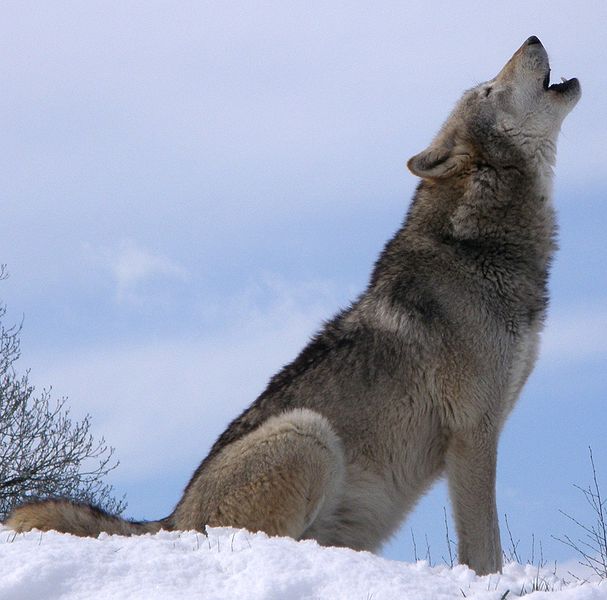
Lawsuit filed to stop wolf killings
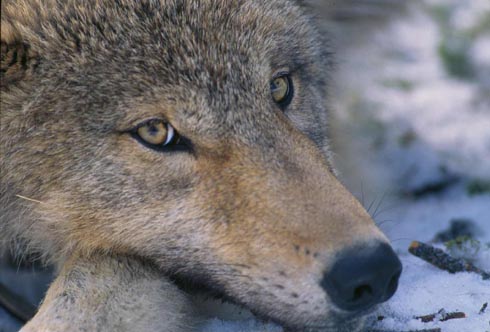
30 days after the Bush Administration removed Yellowstone's Gray Wolves from the endangered list, a lawsuit has been filed by the Natural Resources Defense Council to stop the toll on the small population, now at 37 dead wolves and counting.
On the very day that these wolves lost their Endangered Species protection, a crippled wolf named "Limpy," one of the most photographed wolves in Yellowstone's famous Druid Peak pack, was shot to death when he ventured outside the park.
The Gray Wolf was taken off the endangered list earlier this year, after repeated attempts by the Bush Administration to remove them from the list, despite their marginal population. The NRDC Action Fund has issued a press release (excerpt):
Another wolf was stalked for over 35 miles by snowmobile before being overtaken and shot. Another was found dead on the side of the highway, his still-warm body torn apart by bullets. And, tragically, at least four female wolves have been killed just prior to the denning season, which could doom some of the region's wolf pups.The restoration of the gray wolf in the Northern Rockies is one of America's greatest environmental success stories. Wolves were reintroduced to Yellowstone and the central Idaho wilderness in 1995 after being exterminated by settlers, trappers and the federal government. Since then, these new populations have increased to 1,500 or so animals. Wolves play a crucial role in the ecosystems of the Northern Rockies, helping to preserve riparian forests and maintain healthy populations of raptors and coyotes. They are also a boon to the region's economy, generating tens of millions of dollars in tourist revenue each year.
The Bush Administration's move is supported by trophy hunters who wish to protect the elk population from the wolves so that they may hunt them instead and by ranchers who want to keep the wolves away from their herds.
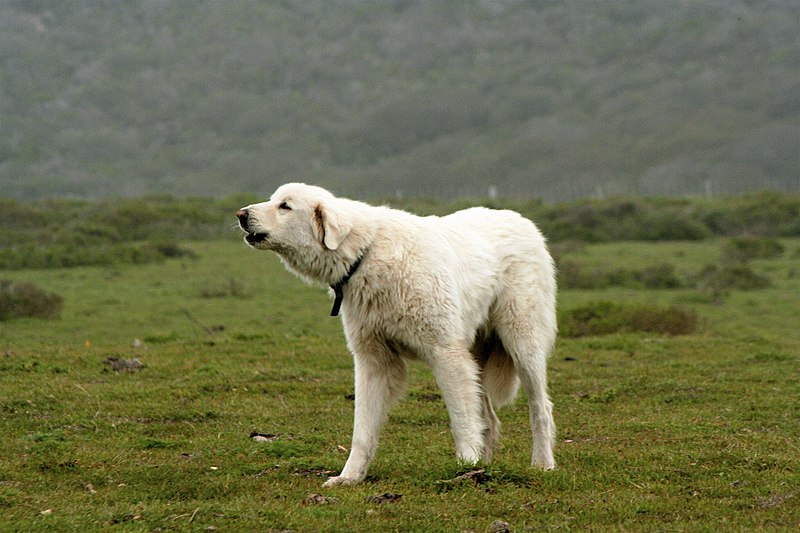
But Rocky Mountain wolves are now in grave danger. In March 2008, the Bush Administration stripped gray wolves in Greater Yellowstone and across the Northern Rockies of endangered species protection. Earlier in the year, the administration issued a new rule allowing the slaughter of hundreds of these wolves. Entire packs of wolves could be gunned down from airplanes in minutes. In fact, the federal government has already spent our tax dollars to buy two planes for the purpose of aerial gunning.A tragic outcome, as there are proven, non-violent methods to keep the wolves away from ranches, such as the ancient Turkish Akbash dog. This is a mastiff-sized white livestock guardian animal brought back to ranches around the world after it was discovered that predators would not approach herds where the dogs were in use...
Posted by
The Environmentalist
at
5/02/2008 11:08:00 PM
Labels: Animals, Endangered Species, Environment, Illegal Wildlife Trade, Politics, Stormchaser, USDI, Wildlife, Wolves
SUBSCRIBE TO: POSTS (RSS)
FEATURE
Judge orders Interior Dept to decide Polar Bear's fate
A judge in Oakland, CA, has ordered the U.S. Interior Department to decide within 16 days whether to list the polar bear as an endangered species due to climate change. This comes after the Interior Secretary, Dirk Kempthorne, failed to appear at a Senate hearing on the status of the polar bear.
ANCHORAGE, Alaska - A federal judge has ordered the Interior Department to decide within 16 days whether polar bears should be listed as a threatened species because of global warming.
"The science is perfectly clear. There's no dispute. The Polar Bear is an endangered species," Kassie Siegel of the Center for Biological Diversity, the lead author of the petition submitted in 2005, said.
U.S. District Judge Claudia Wilken agreed with conservation groups that the department missed a Jan. 9 deadline for a decision. She rejected a government request for a further delay and ordered it to act by May 15.
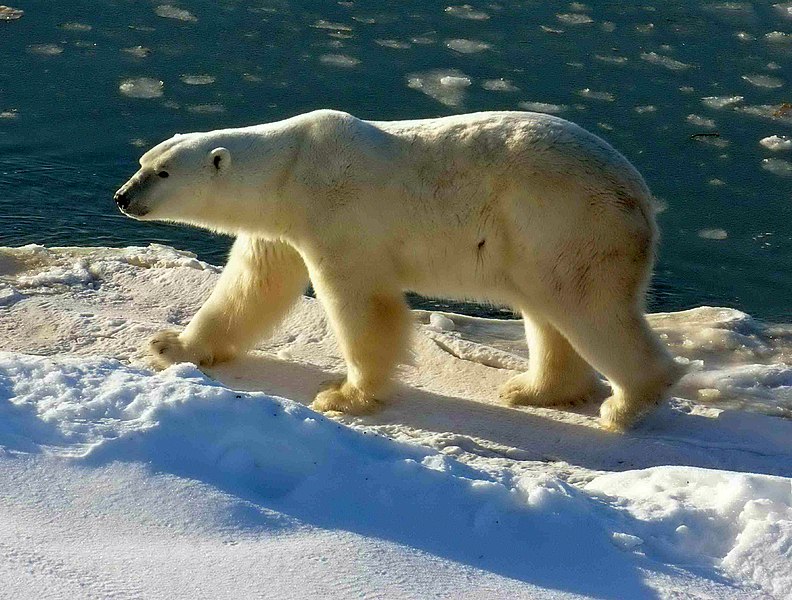
The Interior Department has refused to make a decision after a proposal by the U.S. Fish and Wildlife Service, in December 2006, to list the Polar Bears as threatened under the Endangered Species Act because of the loss of Arctic sea ice due to climate change.Since the proposal, the sea ice has retreated at a record rate, further reducing the Polar Bears' ability to survive, as they require the sea ice to hunt and feed. There have also been reports of Polar Bears drowning in attempts to reach ice. In addition, scientists monitoring the bears have noted a marked decrease in weight of both adult and their young, an unsustainable trend with such a large animal.
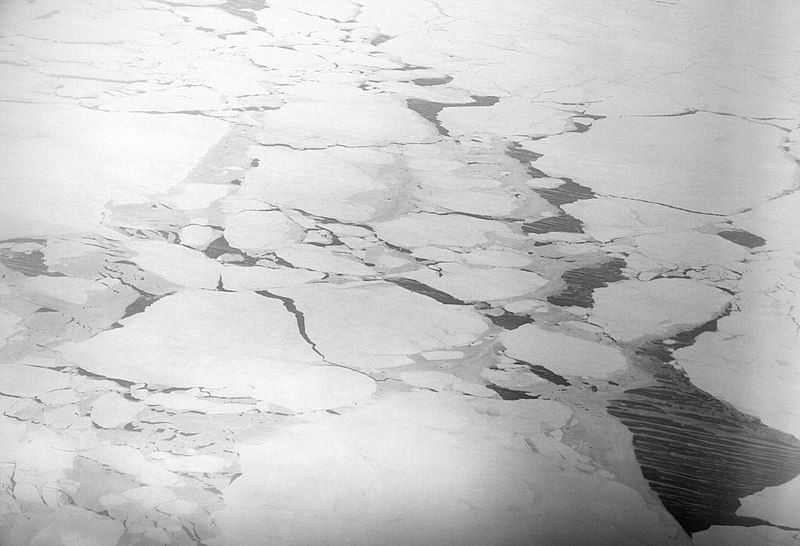
Summer sea ice shrank last year to a record low, about 1.65 million square miles in September, nearly 40 percent less ice than the long-term average between 1979 and 2000. Some climate models have predicted the Arctic will be free of summer sea ice by 2030
The order from the judge is not a victory, as the Interior Department could refuse to list the Polar Bear as endangered. Contraindicated by science, the politic pressure from the right to keep the Polar Bear off the list ties to the efforts to obtain oil rights in Alaska and the concern that the listing will grow beyond the arctic region to include other threatened species. The action was brought by several groups, including the Center for Biological Diversity and the Sierra Club...
Posted by
The Environmentalist
at
5/01/2008 02:04:00 AM
Labels: Animals, Center for Biological Diversity, Dirk Kempthorne, Endangered Species, Interior Department, Polar Bear, Politics, Reuters, Science, Sierra Club, Stormchaser, USFWS, Wildlife
SUBSCRIBE TO: POSTS (RSS)
FEATURE
Salmon fishing canceled off Oregon and California Coasts
This has led to drastic action by the Pacific Fishery Management Council which has canceled all 2008 commercial salmon fishing on the California and Oregon coasts.
Scientists and government officials are expecting this year's West Coast salmon season to be one of the worst in history, because of the collapse of Sacramento River chinook, one of the West Coast's biggest wild salmon runs.The decision still must be validated by NOAA's National Marine Fisheries Service, but no one expects it to be overturned. Even the fishermen who had resisted this action in 2006 are not resisting the decision, as they are on the front lines of the missing runs.
Although commercial salmon fishing off the Washington coast is scheduled to begin May 1, fisheries managers do not predict a good season off either the north or south Pacific coasts.
"For the entire West Coast, this is the worst in history," Don McIsaac, executive director of the Pacific Fishery Management Council, said before several close votes led to the fisheries plan for 2008.
The states of Washington, California and Oregon are expected to declare the fishing waters and rivers a disaster area, paving the way for federal assistance.
Scientists are studying the causes of the Sacramento River chinook collapse, with possible factors ranging from ocean conditions and habitat destruction to dam operations and agricultural pollution.It will not be known until at least next season, maybe longer, whether the salmon will be able to reassert themselves...
Posted by
The Environmentalist
at
4/11/2008 05:06:00 AM
Labels: Agriculture, Animals, Business, Endangered Species, Environment, Reuters, Wildlife
SUBSCRIBE TO: POSTS (RSS)
FEATURE
Interior Secretary no-show at Senate Polar Bear Hearing
The Bush Administration's Interior Secretary, Dirk Kempthorne, was a no-show at last Wednesday's Senate Environmental and Public Works Committee hearing, chaired by Barbara Boxer, on the listing of the polar bear as an endangered species.
"This listing is months overdue, in violation of the Endangered Species Act," the California Democrat said at the hearing of the Senate Environmental and Public Works Committee.
The hearing did receive testimony from witnesses on climate change projections, emissions, and the potential for oil spills to further impact the polar bear's ability to survive amidst declining sea ice due to warming.
The deadline for a decision was Jan. 9. Conservation groups petitioned to list polar bears as threatened more than three years ago because their habitat, sea ice, is shrinking from global warming.
In a letter to Boxer, Kempthorne said he "respectfully" declined her invitation to appear at the hearing, since he is a named defendant in a lawsuit over the polar bear listing filed by an environmental group.
Critics to listing the polar bear as an endangered species include the Interior Department, after its subsidiary, the Fish and Wildlife Service, requested it be added on January 7, 2008. The Interior Department raised the concern that the Fish and Wildlife Service does not have the resources to handle the duties that would arise with the change in designation. Other critics, according to this MSNBC article, have raised a more direct concern that listing the polar bear would limit oil and gas exploration in the Arctic. "It's a professional wildlife agency, not an air-regulating agency," said William Horn, an attorney and former assistant Interior secretary for Fish and Wildlife in the Reagan administration.
To which, Senator Boxer replied: "...sadly, despite the peer-reviewed scientific evidence; despite the opinions of scientists in our own government; despite the fact that we have a strong, successful law to protect imperiled species — the Endangered Species Act — the Bush Administration continues to break the law by failing to make a final decision to list the polar bear."
Posted by
The Environmentalist
at
4/08/2008 01:11:00 AM
Labels: Animals, Barbara Boxer, Climate Change, Dirk Kempthorne, Endangered Species, Environment, Fish and Wildlife Service, Global Warming, IBS, Polar Bear, Politics, Reuters, Senate, Wildlife
SUBSCRIBE TO: POSTS (RSS)
FEATURE
Chinook Salmon at 'disastrous' all-time low
“This is very bad news for West Coast salmon fisheries,” said Pacific Council Chairman Don Hansen. “The word ‘disaster’ comes immediately to mind, and I mean a disaster much worse than the Klamath fishery disaster of 2006.”
Sacramento River salmon are primarily caught off California and Oregon, but are also found off Washington and as far north as British Columbia. They are typically one of the healthiest and most abundant stocks on the west coast, and are the dominant contributor to both commercial and recreational fisheries off California and most of Oregon. ~snip~“The biological situation for Sacramento River fall Chinook salmon is unprecedented in our experience,” said Pacific Council Executive Director Dr. Donald McIsaac. “We are looking at back-to-back record low brood year production..."
The forecast of very low abundance is based on the return of “jack” salmon in the fall of 2007. Jack salmon are young male fish that return to the rivers as two year olds, unlike adult fish which return at age three or older. Jack salmon are currently the best statistical indicator of returning adult population the following year. Only about 2,000 Sacramento River fall Chinook jacks returned in 2007, by far a new record low count. This compares to a long‐term average of about 40,000 and the previous record low of about 10,000, which occurred in 2006.
Posted by
The Environmentalist
at
3/19/2008 07:00:00 AM
Labels: Agriculture, Animals, Business, Chicago Sun-Times, Endangered Species, Environment, Science, Wildlife
SUBSCRIBE TO: POSTS (RSS)
FEATURE
Gray Wolves Off Endangered List
he U.S. Department of the Interior took the Northern Rockies' Gray Wolf off the endangered list today, opening them up for hunting as described in this earlier post from our managing editor.
Environmental groups have promised to sue to keep the wolves on the list:
Video of the Gray Wolves in the wild is available, as is the press release from the NRDC and the CNN/AP article.LIVINGSTON, Mont. (February 21, 2008) – Wolves in the Northern Rockies will lose protection under the Endangered Species Act under a new plan announced today by the Bush administration. The plan to “delist” the wolves threatens to reverse one of America’s most successful wildlife recovery efforts and puts the species back at risk of extinction, according to the Natural Resources Defense Council (NRDC).
NRDC said it will immediately notify the government of its intent to file a lawsuit challenging the delisting decision. It said that it is premature to revoke endangered species protections because the wolves have not fully recovered.
Posted by
stormchaser
at
2/21/2008 01:24:00 PM
Labels: Animals, Endangered Species, Environment, Illegal Wildlife Trade, NRDC, Politics, Reuters, Stormchaser, USDI, Wildlife, Wolves
SUBSCRIBE TO: POSTS (RSS)
FEATURE
A New Climate Reality
It begins to look horrifyingly familiar: one person's agony is another's data.
Once in a while, however, we do try to step back and take empathetic stock.
First and foremost with the actual climate events: storm, drought, wind, fire, flood.
There are the forces (forcings) behind those events: The increase in greenhouse gases, the loss of glaciers and sea ice, the inability of the Southern Ocean to function as a carbon sink (in case you were wondering why things seemed to be changing so quickly), the greater wind speeds due to the increased temperature differential between the Northern and Southern Hemisphere, pollution, of course; the C02 released into the atmosphere from the recent fires in Southern California and in Greece last summer and don't get me started on whether the Methane once trapped in the tundra, now no more, is over-hype or horror...
Then there is the impact upon so many species, fully one-third of which the new IPCC report warns may be lost due to climate change. Polar bears are the most obvious indicator, but there are also the diminishing pollinators we depend upon, which could be climate change or misuse of colonies, or disease, or all of the above; the coral in the Great Barrier Reef, the wolves that are about to be removed from the endangered list, so hunters can shoot them and put them back on again...
One might begin to understand why we gravitate toward cold data over warming empathy.
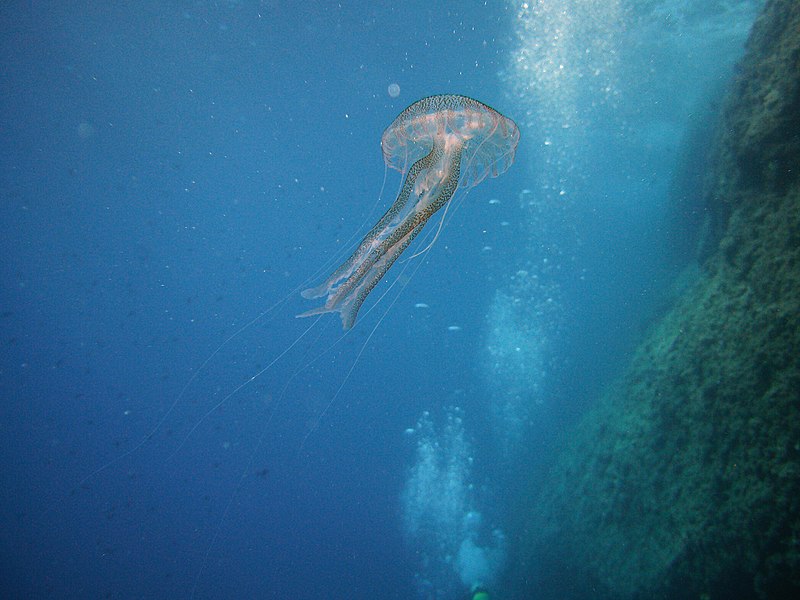
The fishermen who desperately tried to reach the trapped fish (there were wide nets placed a mile offshore to create a near-wild farm environment) stopped and stared in shock as they faced a solid block of glowing red jellyfish to the horizon, and then in horror when they realised they could not get through to their prized and beloved stock, the salmon that had been so revered, it had been served at the Queen's table for her 80th birthday. The salmon died.
What makes this alarming, aside from the fact that billions of glowing red jellyfish killed 100,000 salmon, was that they traveled from the warm waters of the Mediterranean to (what are supposed to be) the cold waters of the North Irish Sea to do it.
Scientists have attributed it to global warming. We have not seen their data, but we doubt we've seen the last of this type of bizarre event.
Which is our way saying that, no matter what the outcome of the Bali Conference, no matter who signs onto the resultant climate accord or to its predecessor, Kyoto, as they should have done years ago (thank you, Kevin Rudd), no matter how much time Al Gore spends with George W in the Oval Office showing him his Nobel medal, while the Bush administration insists they can make a better climate deal than Kyoto...
Without mentioning the deals behind the scenes being worked out between Bush and Putin and Beijing to emasculate the binding portions of the upcoming Bali Accord...
It is time for everyone to adjust to a new reality.
That reality includes the need for increased humanitarian commitment, as evidenced by the US Naval vassels that recently arrived in Bangladesh to provide aid. It includes following Australia's lead and voting in a greener US leader. That's an interesting feature to the Bali Conference, by the way -- the way everyone's talking about how we just need to wait out George Bush -- while not wanting to hear a tall, skinny ex-patriot Scot who tries to remind his colleagues that there's still Putin and the Chinese and the Sudenese and the Burmese (I will not dignify that regime with the name they chose), and the (fill in blank)...
The time is now, not a bit over a year from now, to change policy.
Which has become a written commitment from diverse and, in some cases, unlikely sources. Are you aware that Rupert Murdoch's NewsCorp is among the big business signatories calling for binding carbon targets to come out of Bali? As this post points out, when even Fox News calls for policy change on global warming, it's time to deny the deniers a voice.
And then there was this report from the Strategic Studies Institute of the U.S. Army War College warning that climate change will lead to political instability and, potentially, to global war.
Our empathy meter is now pinned with fear.
In the long run, the solution, of course, includes weaning everyone off oil. It includes everyone reducing their carbon footprint. But those are big ideas and far removed from most peoples' consciousness and everyday life.
But, perhaps, not for long. The question of the new reality is how everyone will learn to live in an increasingly unstable climate, where droughts last months instead of weeks, and then years instead of months. Where storms speed up as they approach land (Cyclone Sidr). Where floods happen so fast they defy forecast. Where food becomes less tasty, less nutritious, less interesting, as we lose more pollinators. Where the loss of species becomes a psychic wound upon the planet's soul because we can feel that loss, even if we can't identify the empty hole in both our planet's and our own souls as they go.
We all must do what we can to reverse climate change. No one should give up because we've let it go too far. But it's a new reality that the loss of the carbon sink in the Southern Ocean has sped up the timetable for change and we now have to adjust to that new reality while we work to reverse that change. That includes facing the pain that empathy brings when we peer out from under our numbers and realize that there are millions who will be leading a very different life. It also means facing the many enemies we'll have created as the deprivation of drought and flood topples unstable governments, providing new footholds for extremism where none existed before.
It's been a hell of a fossil fuel party we've been enjoying for the last century or so. It's time to clean up, do the dishes, recycle the garbage, polish the windows, and walk (don't drive) outside.
Posted by
stormchaser
at
12/03/2007 01:34:00 PM
Labels: Animals, Bali, Bangladesh, Climate Change, Endangered Species, Environment, Fauna, Global Warming, Stormchaser, Wildlife
SUBSCRIBE TO: POSTS (RSS)
FEATURE
U.N. Climate Panel Warns of 'Abrupt' Warming
The Intergovernmental Panel on Climate Change (IPCC) will issue a report this weekend that warns of "abrupt and irreversible" impacts unless world leaders address climate change this year.
In its strongest statement to date, the panel warns of a potential temperature rise up to 6.4C, sea level rise up to 43cm, Arctic summer ice to disappear within the second half of this century, and an increase to the increase we're already seeing in heat waves and tropical storm intensity.
The report condenses information from the three major reports produced by the IPCC:
Working Group I: Physical Science Basis
Working Group II: Impacts, Adaptation and Vulnerability
Working Group II: Mitigation of Climate Change
The Synthesis Report will be introduced by U.N. Secretary General, Ban Ki-moon, in a statement to the 450 delegates of the 27th Session of the Intergovernmental Panel on Climate Change (IPCC). The Session is being held this week in Valencia, Spain, a region which is currently experiencing a loss of available water due to its diminishing reservoir (see: 43 percent of the United States).
The Synthesis Report will cover the following topics:
- Observed changes in climate and its effects
- Causes of change
- Climate change and its impacts in the near and long term under different scenarios
- Adaptation and mitigation options and responses, and the inter-relationship with sustainable development, at global and regional levels
- The long term perspective: scientific and socio-economic aspects relevant to adaptation and mitigation, consistent with the objectives and provisions of the Convention, and in the context of sustainable development
- Robust findings, key uncertainties
"Climate change is here, it's impacting our lives and our economies, and we need to do something about it," commented Hans Verolme, director of the climate change programme with the environmental group WWF. "After this report, there are no politicians left who can argue they don't know what climate change is or they don't know what to do about it."
Given the unexpected growth in C02 emissions due to the loss of carbon sinks, the aforementioned drought conditions in 43 percent of the U.S., the category-four cyclone that just hit low-lying Bangladesh, it is should not be surprising that the UN report warns of millions that could be affected by rising temperatures and up to a third of all species that could be lost.
Not surprising, perhaps. Alarming, heartbreaking, frightening and frustrating, definitely, and, according to the IPCC and the United Nations, an impact that may happen abruptly and irreversibly if world leaders don't act to counteract climate change at the U.N. IPCC meeting scheduled for Bali this December.
Posted by
The Environmentalist
at
11/16/2007 07:37:00 PM
Labels: Animals, Climate Change, Drought, Endangered Species, Environment, Glaciers, Global Warming, IPCC, United Nations, Wildlife
SUBSCRIBE TO: POSTS (RSS)
FEATURE
It's Official: The HoneyBees are Gone [Congressional Testimony]
by Janet Ritz
Experts are gathering outside Washington, D.C. today for a two-day meeting to collectively scratch their heads about the Colony Collapse Disorder, aka 'Where have all the honeybees gone.'
The phenomenon was first noticed late last year in the United States, where honeybees are used to pollinate $15 billion worth of fruits, nuts and other crops annually. Disappearing bees have also been reported in Europe and Brazil.
Commercial beekeepers would set their bees near a crop field as usual and come back in two or three weeks to find the hives bereft of foraging worker bees, with only the queen and the immature insects remaining. Whatever worker bees survived were often too weak to perform their tasks.
There's been a lot of speculation about this lately. Others have written extensively on their ideas as to the cause. I don't know the cause, so I thought I'd write an article that addresses what we do know, what questions are being asked, what is being done, and what has been reported, so far, in Congressional testimony.
The scientists and researchers meeting in Washington today have formed working groups from several universities, government agencies and research facilities...
Posted by
The Environmentalist
at
4/23/2007 09:09:00 AM
Labels: Agriculture, Animals, Bees, Business, Congress, Endangered Species, Environment, Fauna, Living, Politics, Science, Wildlife
SUBSCRIBE TO: POSTS (RSS)