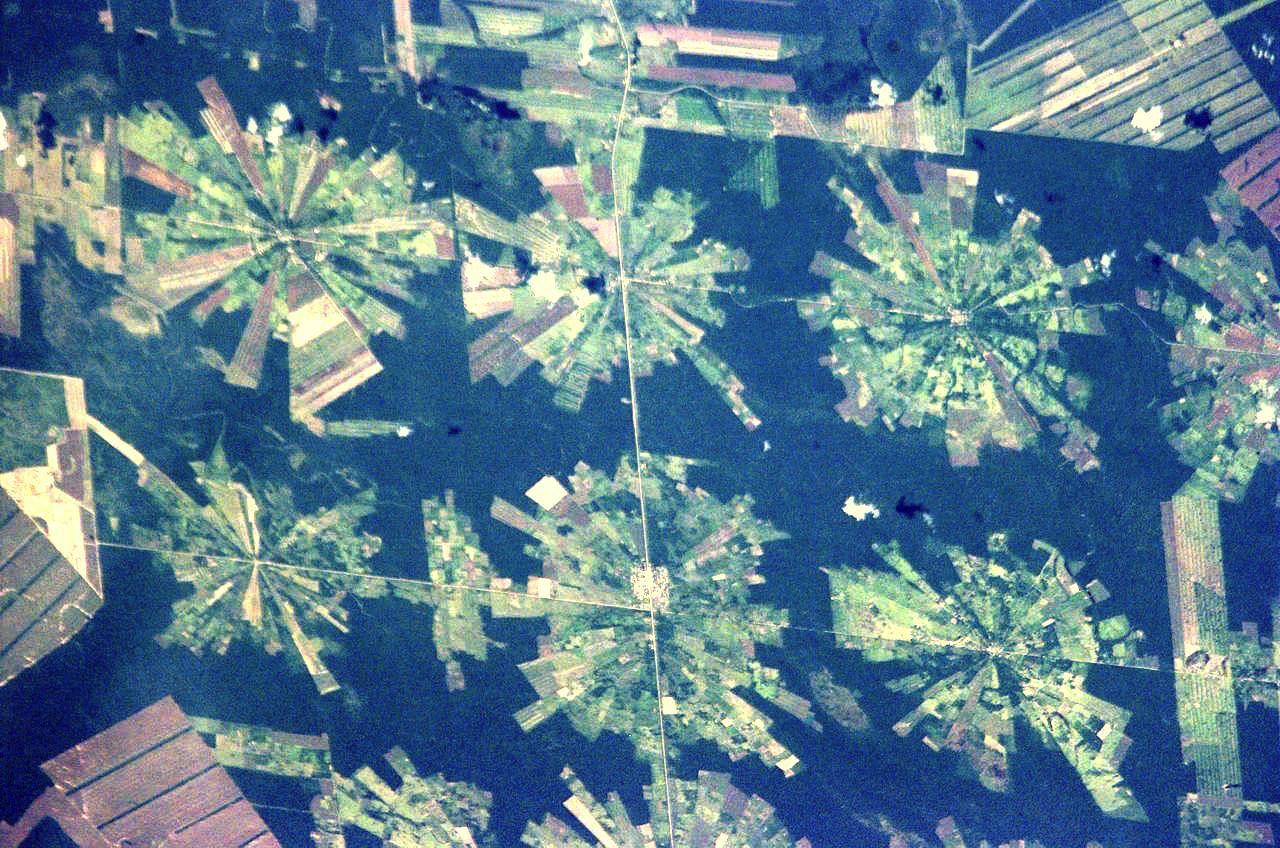
Seventy percent of the world’s freshwater is used for irrigation, and global water resources are drying up as climate change takes hold and population growth continues. 60 percent of the world’s hungry people live in South Asia and sub-Saharan Africa—most of them on small farms—where they do not have a reliable source of water to produce sufficient yields. Only 4 percent of the cultivated land in sub-Saharan Africa is currently equipped for irrigation. 95 percent of cropland in the region depends on rain, and climate scientists predict that rainfall on the continent will decline in the coming decades. But there is great potential to expand irrigation with small-scale solutions. Continued...
FEATURE
Getting “More Crop Per Drop” to Strengthen Global Food Security
Seventy percent of the world’s freshwater is used for irrigation, and global water resources are drying up as climate change takes hold and population growth continues. 60 percent of the world’s hungry people live in South Asia and sub-Saharan Africa—most of them on small farms—where they do not have a reliable source of water to produce sufficient yields. Only 4 percent of the cultivated land in sub-Saharan Africa is currently equipped for irrigation. 95 percent of cropland in the region depends on rain, and climate scientists predict that rainfall on the continent will decline in the coming decades. But there is great potential to expand irrigation with small-scale solutions. Continued...
Posted by
The Environmentalist
at
5/03/2011 09:30:00 PM
Labels: Agriculture, Flora, water, World News
SUBSCRIBE TO: POSTS (RSS)
FEATURE
Agriculture: The Unlikely Earth Day Hero
Posted by
The Environmentalist
at
4/21/2011 12:44:00 PM
Labels: Agriculture, Climate, Climate Change, Earth Day, Environment, Flora, Nourishing the Planet, World News
SUBSCRIBE TO: POSTS (RSS)
FEATURE
State of the World 2011 Symposium in Washington DC and Live Streaming Online
Posted by
The Environmentalist
at
1/19/2011 10:58:00 AM
Labels: Agriculture, Environment, FARMING, Fauna, Flora, FOOD, Hunger, STATE OF THE WORLD 2011, SUSTAINABLE AGRICULTURE, World News
SUBSCRIBE TO: POSTS (RSS)
FEATURE
Termites Foretell Climate Change in Africa’s Savannas
| Termite Mound in Tanzania |
Palo Alto, CA—Using sophisticated airborne imaging and structural analysis, scientists at the Carnegie Institution’s Department of Global Ecology mapped more than 40,000 termite mounds over 192 square miles in the African savanna. They found that their size and distribution is linked to vegetation and landscape patterns associated with annual rainfall. The results reveal how the savanna terrain has evolved and show how termite mounds can be used to predict ecological shifts from climate change. The research is published in the September 7, 2010, advanced online edition of Nature Communications.“By understanding the patterns of the vegetation and termite mounds over different moisture zones, we can project how the landscape might change with climate change,” explained co-author Greg Asner at Carnegie. “Warming is expected to increase the variability of future precipitation in African savannas.” Continued...
Posted by
The Environmentalist
at
9/10/2010 09:13:00 AM
Labels: Climate Change, Environment, Fauna, Flora, Global Warming, Science
SUBSCRIBE TO: POSTS (RSS)
FEATURE
U.S. Energy Secretary: BP Oil Spill Update
| U.S. Energy Secretary Steven Chu talks with President Barack Obama |
My job has been to oversee the federal science team – a group of top scientists from the Department of Energy’s national labs, the federal government, and academia, along with outside industry experts. We have been working seven days a week to tackle this very challenging problem. Our focus has been on collecting as much data as possible and making sure we plot the best path forward based on the facts.
Because of the gravity of the situation, the Administration asserted its authority over BP’s actions. As we evaluated the scenarios for stopping the leak, BP was not allowed to move forward on a course of action without the government’s approval.
The results of the well integrity tests (including additional monitoring of the wellhead and the surrounding area, which we had insisted upon) indicated that the well was likely intact, and we saw no evidence that oil was leaking from the wellbore into the rock formation. This meant we would be able to safely pump fluid into the well to attempt to kill it.
After the science team reached a consensus that the static kill attempt could work with minimal risk, we gave BP the go-ahead to proceed. During the static kill, the damaged well was filled with mud, stabilizing the pressure within the well and relieving a lot of the excess pressure on the damaged blowout preventer and ceiling cap. I am pleased to tell you that it was completed successfully. Continued...
Posted by
The Environmentalist
at
8/10/2010 04:42:00 PM
Labels: BP, DEPARTMENT OF ENERGY, Environment, Fauna, Flora, GULF OIL DISASTER, GULF OIL SPILL, Science, STEVEN CHU
SUBSCRIBE TO: POSTS (RSS)
FEATURE
Study: Phytoplankton, Plants at Base of Ocean Food Chain, in Decline Due to Warming Seas
A study has found that phytoplanktons, the base of the ocean food chain upon which everything from whales to humans depend, have declined by as much as forty percent due to the increase in the temperature of the seas.
The comprehensive report, released by Dalhousie University, has determined phytoplanktons are impacted by warming.
Microscopic phytoplankton that form the foundation of the marine food chain are declining, according to a new Canadian study that indicates that the ocean’s ecosystem and fisheries could be changing.Phytoplankton feed the organisms that, in turn, feed everything from whales to humans. The potential impact on the climate is as troubling. Phytoplankton, which live (and are dying) on the surface of the seas, produce oxygen. Continued...
Researchers at Dalhousie University conducted the first global study of the populations of these microscopic organisms in the past century and found the declines – averaging about 1 per cent a year, and approximately 40 per cent since 1950 – are correlated with increases in sea surface temperatures.
Posted by
The Environmentalist
at
7/31/2010 12:15:00 PM
Labels: Climate Change, Endangered Species, Environment, Fauna, Flora, Global Warming, Oceans, Phytoplankton, Science
SUBSCRIBE TO: POSTS (RSS)
FEATURE
Sharks Gather at Oily Shore To Escape Oxygen Dead Zone in Gulf (Video)
"Video footage shot on June 18 by Ben Raines of the Press-Register and uploaded the following day captured both oil in the water and a Gulf water teeming with sharks. The video closes with a view of a discarded American flag in the water, clotted with oil like the crab in front of it."
Posted by
The Environmentalist
at
6/29/2010 01:27:00 AM
Labels: BP, Environment, Fauna, Flora, GULF OIL DISASTER, GULF OIL SPILL, Press-Register, Science
SUBSCRIBE TO: POSTS (RSS)
FEATURE
Historic Aerial Footage Reveals the Scope of the BP Gulf Oil Disaster (VIDEO)
The video is heartbreaking but vital for the understanding of the scope and enormity of the disaster. It shows the sea and the operations underway at the site of the blown well and compares the mitigation efforts to the true size of the disaster and its impact on wildlife:
John Wathen: "This was the most emotionally disturbing video I have ever done. A flight over the BP Slick Source where I saw at least 100 Dolphins in the oil, some dying. I also photographed a Sperm Whale covered in oil all around it's blow hole."Mr. Wathen asks that concerned parties visit two Gulf funds listed on the video, which is available at this link.
Posted by
The Environmentalist
at
6/28/2010 03:49:00 PM
Labels: BP, Climate Change, Environment, Fauna, Flora, GULF OIL DISASTER, GULF OIL SPILL, History, HURRICANE CREEK KEEPERS, Science, SOUTH WINGS
SUBSCRIBE TO: POSTS (RSS)
FEATURE
Flow rate from BP oil spill many times higher than previously estimated
The federal government has doubled the official estimate of the oil spewing from BP's damaged well head on the Gulf floor to 20,000 to 40,000 barrels per day. That is many times the estimate a few weeks ago and exponentially more than the initial estimate calculated by the pictures of the disaster provided via government satellite.
A government panel on Thursday essentially doubled its estimate of how much oil has been spewing from the out-of-control BP well, with the new calculation suggesting that an amount equivalent to the Exxon Valdez disaster could be flowing into the Gulf of Mexico every 8 to 10 days.This dramatic change in estimate came about after it was discovered that BP had high resolution video of the Gulf floor they had chosen neither to release or to inform Congress or the Flow Rate Group of its existence. It is expected, as the newly revealed high resolution video is studied by the Flow Rate Group scientist who've been brought together by the USGS, the estimates will continue to rise. Continued...
A barrel is 42 gallons, so 30,000 barrels would equate to nearly 1.3 million gallons a day. The Exxon Valdez disaster in 1989 is estimated to have spilled 10.8 million gallons of oil into Prince William Sound in Alaska.
Ira Leifer, a researcher at the University of California, Santa Barbara, and a member of the flow-rate group, said the new figures confirmed a suspicion he had developed, based on looking at satellite data, that the rate of flow for the well was increasing even before BP cut the riser pipe.
"The situation is growing worse," Dr. Leifer said.
Posted by
The Environmentalist
at
6/11/2010 03:43:00 AM
Labels: BP, Environment, Fauna, Flora, Flow Rate Group, GULF OIL DISASTER, GULF OIL SPILL, Ira Leifer, Live Oil Feed, Pollution, USGS
SUBSCRIBE TO: POSTS (RSS)
FEATURE
New Video of Oil Plumes: Cousteau: "This is a nightmare"
For the first time since the BP Deepwater Horizon tragedy over a month ago, "Good Morning America" Weather Anchor Sam Champion, along with Philippe Cousteau and a team of specially-trained divers, reported from under the water in the Gulf of Mexico to see first-hand what is happening beneath the surface. Wearing special hazmat dive suits, the team is the first to dive in - and document - the oil-laden waters off of the Louisiana coastline.
Posted by
The Environmentalist
at
5/25/2010 10:38:00 AM
Labels: BP, Environment, Fauna, Flora, GULF OIL DISASTER, GULF OIL SPILL, Pollution
SUBSCRIBE TO: POSTS (RSS)
FEATURE
Live Video Feed of the Gulf Oil Disaster
Posted by
The Environmentalist
at
5/20/2010 11:46:00 AM
Labels: BP, CBS NEWS, Climate Change, Edward Markey, Environment, Fauna, Flora, GULF OIL DISASTER, GULF OIL SPILL, Politics, Pollution
SUBSCRIBE TO: POSTS (RSS)
The Gulf Coast Oil Spill: An ecological disaster years in the making
BATON ROUGE, La. (April 30) -- Fingers of greasy sheen from a massive oil slick in the Gulf of Mexico have reportedly begun lapping the Louisiana shoreline, the first salvo in what could become the nation's worst environmental disaster in decades
Crews in boats were patrolling coastal marshes early today along the coast looking for areas where the oil has flowed in, the Coast Guard told The Associated Press.
AP said the oil slick could become the nation's worst environmental disaster in decades, threatening to eclipse even the 1989 Exxon Valdez spill in Alaska in scope. It imperils hundreds of species of fish, birds and other wildlife along the Gulf Coast, one of the world's richest seafood grounds, teeming with shrimp, oysters and other marine life.
Brazil and other countries require a special emergency shut-off mechanism on their offshore rigs. The Deepwater Horizon rig was not subject to that requirement by the United States. Continued...
Posted by
The Environmentalist
at
5/06/2010 05:18:00 PM
Labels: Barack Obama, BRITISH PETROLEUM, Business, Endangered Species, Fauna, Flora, Halliburton, Katrina, Oil, Politics, Science, Sierra Club
SUBSCRIBE TO: POSTS (RSS)
FEATURE
What's the true cost of photocopy paper?
They say the pen is mightier than the sword, but is it mightier than the chainsaw? Plans are being finalized this summer for a massive controversial logging operation on the Indonesian island of Sumatra to satisfy the ever increasing demand for pulp, paper and palm oil.
This is no small concession. It is a 33,600-hectare operation led by joint venture company, Asia Pulp & Paper/Sinar Mas Group, which has previously incurred the wrath and criticism of environmental groups, the Forest Stewardship Council and its own clients, some of whom cut ties and sourced paper elsewhere, citing APP’s devastating environmental practices:Office-supplies retailer Staples Inc. has severed all contracts with Singapore-based Asia Pulp & Paper Co. Ltd., one of the world's largest paper companies, in a move that shows concerns over forest destruction and global warming are having an impact on big U.S. paper buyers.
At the moment, despite vigorous protests from a coalition of well known local and foreign environmental groups and scientists, APP, as the world’s largest paper company (in terms of forest clearance), looks set to go ahead with the operation, despite environmental concerns. Continued...
Posted by
The Environmentalist
at
7/01/2009 02:30:00 PM
Labels: Business, Climate Change, Deforestation, Endangered Species, Environment, Fauna, Flora, Global Warming, Indonesia, JOANNA PENN, PAPER, PROTEST, World News
SUBSCRIBE TO: POSTS (RSS)
FEATURE
The Plight of the Bumblebee
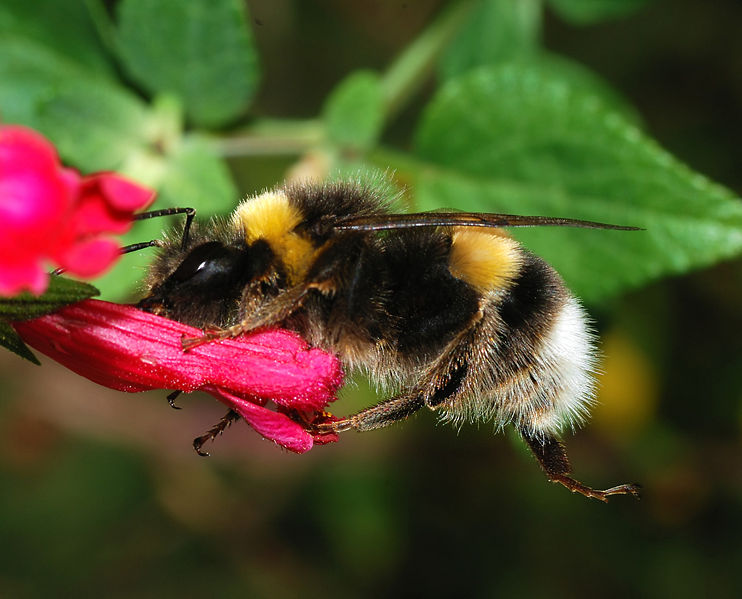
Long-term trends for several wild bee species -- especially bumblebees -- as well as some butterflies, bats, and hummingbirds... show population drops.That focus may now change as word comes from scientists that at least one bumblebee species from the Northwestern region of the United States, Franklin's Bumblebee, may have gone extinct.
This is a serious development. Not only because the loss of any species due to human activity is, in this writer's opinion, unconscionable, but because we depend on this species more than we've taken the time to understand.
According to this newly released National Academy of Sciences report, the bumblebee is one of many pollinators losing their battle to survive because of 'habitat lost to housing developments and intensive agriculture, pesticides, pollution and diseases spilling out of greenhouses using commercial bumblebee hives.'
Like the honeybee, the bumblebee has been hurt by the introduction of a non-native parasite. Many pollinator declines are associated with habitat loss...
It turns out that our native American bumblebee (the honeybee was imported) does more than provide a pleasant bass note to the summer hum we hear outside our window amidst the lawn mowers, sprinklers and children's laughter. The reality is that our humble bumblebee is one of the hardest workers in the wild, accounting for the pollination that provides food for bears and birds -- and for us -- by pollinating ~fifteen percent of U.S. crops. And that percentage has been growing as farmers turn to the lowly bumblebee to replace the disappearing honeybees. Continued...
[1] [2] read more...
Posted by
The Environmentalist
at
4/18/2009 02:23:00 AM
Labels: Agriculture, Bumblebee, Business, Fauna, Flora, Science
SUBSCRIBE TO: POSTS (RSS)
FEATURE
Leadership Needed to Address Deforestation Emissions
Today, NRDC joined a diverse group of environmental, conservation, and development organizations; businesses; and leading academics in a "Call for Leadership" to address deforestation (available here and a list of partners here). Frances Beinecke, our President, helped launch this "Call" with a speech to leading US policymakers from Congress and elsewhere at an event hosted by the group Avoided Deforestation Partners (that I wrote about here). She was joined by a high-level group of leading policymakers, including Senator's Kerry and Lugar and Nobel-Prize winner Wangari Maathai.The US and the world need to simultaneously cut all sources of global warming pollution - from both the energy sector and tropical deforestation. With deforestation accounting for about 20% of the world's global warming pollution, addressing deforestation is a critical component of the world's efforts to combat global warming. So that is why we came together to launch this "Call for Leadership"...to focus US attention on helping to get a solution to this challenge.
Time is not on our side. Without a significant change, much of the world's forests will be lost in the span of decades, not centuries. And we need to mobilize resources and political will immediately to ensure that a sound strategy for deforestation's global warming pollution is integrated into the new international agreement to be reached in Copenhagen -- in just around 10 months -- and in the key tropical forest countries.
The US must take a leadership role in helping combat these emissions, just as we must take an overall leadership role in combating global warming. The good news is that the US has a long record of bi-partisan support for efforts to address the loss of the world's native forests, including the adoption of an amendment to the US law which helps developing countries address illegal logging.
Leadership needs to come both by ensuring that significant financial resources and other support is effectively integrated into the US climate legislative and that the US plays a strong role in ensuring that the new international global warming agreement also includes these tools. Continued...
[1] [2] read more...
Posted by
The Environmentalist
at
2/09/2009 07:34:00 PM
Labels: Climate Change, Deforestation, Environment, Flora, Global Warming, Jake Schmidt, NRDC
SUBSCRIBE TO: POSTS (RSS)
FEATURE
Macedonians plant six million trees in a single day
"If Macedonia, a country of two million people, can plant six million trees, we can only imagine how many trees can be planted in other, bigger countries," Trajanov told Reuters.SKOPJE (Reuters) - Thousands of Macedonians took to the hills and forests on Wednesday to plant six million trees in a single day as part of a mass reforestation drive in the Balkan country.
The main aim of the campaign was to replant Macedonia's forests after extensive wild fires over the past two summers, and organizers trumpeted the scheme's environmental benefits at a time of global warming.
"Our goal is to make Macedonia "greener" and make people more aware of the needs of this planet," said Macedonian opera singer Boris Trajanov, who initiated the project.
The purpose of this initiative is to plant more than 2 million tree seedlings corresponding to the population of the Republic of Macedonia in a single day, on March 12, 2008. The action shall be entitled « Tree day ».Trajanov says he hopes to extend the reforestation project across the Balkans.
For this purpose we have also created an Initiative Board, composed of about one hundred renown citizens, distinguished members of society, creators of public opinion, artists, representatives of the scientific milieu, music stars...
Posted by
The Environmentalist
at
12/27/2008 09:16:00 PM
Labels: Boris Trajanov, Climate Change, Environment, Flora, Global Warming, Macedonia, Reforestation, World News
SUBSCRIBE TO: POSTS (RSS)
FEATURE
How to Plant a Christmas Tree
If anthropogenic climate change is the result of the millions of energy decisions each of us makes in the course of our lives, then it stands to reason that the solution to climate change lies in making those decisions differently. Each of us must sign a treaty with ourselves, a personal Kyoto Protocol. Without that individual commitment, no international agreement to mitigate global warming will be worth the recycled paper it’s written on.
This point came home recently when I met a woman named Clare Dakin in London. Clare is the UK’s representative for a program called Project Green Hands. Its objective is to reverse the desertification of Tamil Nadu, the seventh most populous state in India, by planting 114 million trees within the next 10 years.
So far, six million trees have been planted by 1 million people in three years, including 850,000 in a single day, a Guinness Book world record. The people who plant the trees are volunteers who each pledge to care for a single sapling for two years.
Clare is evangelical about this work. “The project is rare in its beauty, its wisdom, its depth of understanding of people and nature and its immediacy, logic and global significance,” she says. “It is aforestation on barren farmland…to tackle water scarcity, soil erosion and community rehabilitation through mass education around sustainability and mass participation in planting and tending.”
So far, Clare says, 1,000 villages have joined the project. The goal is to increase tree cover in Tamil Nadu from 17 percent to 30 percent or more – and to do it in a way that can be replicated in other parts of the world. Continued...
Posted by
The Environmentalist
at
12/22/2008 09:08:00 AM
Labels: American Forests, Bill Becker, Climate Change, Environment, Flora, Global Warming, Green Belt Movement, India, PCAP, Project Green Hands, UNEP
SUBSCRIBE TO: POSTS (RSS)
FEATURE
One Step Forward on Deforestation in Poland...But More Should Have Been Achieved
For the past week and half, climate negotiators have been trying to push forward agreement on important elements of the global efforts to address deforestation and forest degradation emissions. We took one step forward (but unfortunately many hoped we could have taken two steps forward or more). The draft agreement (available here) is touted as a: Deal struck on forests in climate talks by some (Associated Press).
Modest progress has been made on one important element -- we will now be able to negotiate on the tricky political issues of how incentives will be created, to whom they will they flow, and under what rules. This is a positive step forward as we will now be able to get down to the "nitty gritty" details on the deforestation debate (as I discussed here, a number of us were stressing this message in a joint letter).
Unfortunately, a number of us had hoped to begin to get agreement on some key details that aren't caught up in the broader political debate. These are extremely important elements, but not necessarily as "political" (or so we thought). In particular, we were hoping to get agreement on:
- Protection of biodiversity
- Protection of indigenous rights
- Ensuring that the full emissions from deforestation were accounted and that deforestation reductions can't be directly "offset" by replanting of forests
So, how did these important details fair this week?
Protecting indigenous rights? Ensuring that indigenous lands are preserved and the rights of these indigenous peoples are protected has always been a key issue. It looked like there was an emerging consensus from the negotiations in Accra, Ghana on this point. However, some countries have legal issues with an international agreement that enshrines the rights of specific individual groups. This seems to be the U.S. negotiators stated problem. Some developing countries also pushed to have it either excluded or seriously watered down. They either don't respect the rights of indigenous communities, acknowledge that they exist, and/or want the international community to tell them what to do on this issue. Continued...
[1] [2] read more...
Posted by
The Environmentalist
at
12/11/2008 09:44:00 AM
Labels: Climate Change, Deforestation, Environment, Flora, Global Warming, Jake Schmidt, NRDC, Poznan, UNFCCC
SUBSCRIBE TO: POSTS (RSS)
FEATURE
Slow Progress in Poland Climate Negotiations…but Some Key Issues Emerging
But, some emerging debates have arisen that will be central to the negotiations next year as the world leads-in to an international agreement in Copenhagen (Dec. 2009). Timeline for an international agreement and will it be a "final" detailed agreement in Copenhagen? Recent news stories coming out of Poland have contained mixed messages from key players on whether an agreement can be reached in Copenhagen and how much detail will be in that agreement (see Greenwire (subs. req.), Associated Press, and Agence France-Presse). There is a lot of soul searching about what the Copenhagen agreement will actually have in it. Will the agreement coming out of Copenhagen contain enough of the key details to be ratified or otherwise implemented right afterwards (e.g. with enough details that countries will know exactly what they are getting into) or will it be an agreement on the main framework with the details to be worked out later? Clearly the U.S. Congress and the new Administration will need to move hand in glove and only commit the U.S. internationally to what it can actually implement in domestic law. So, NRDC and 17 other major US environmental and faith groups submitted a letter to all delegates in Poznan saying that: Emissions Reduction targets and "shared vision". There is an extensive debate on developed countries committing to reduce their emissions 25-40% below 1990 levels in 2020 and developing countries undertaking a 15-30% cut below what their emissions would have been otherwise in 2020 (so-called business as usual cut). The EU is pushing the 15-30% range for developing countries and the developed countries are pushing to get agreement that developed countries as a whole will reduce their emissions 25-40% below 1990 levels in 2020. This won't get resolved here in Poland, but it is a "coming attraction" for the year to come. This back and forth between what level of reductions developed countries will undertake and how much action developing countries take will be one of the main points of debate in the lead-in to Copenhagen. Continued...The first week of the Poland Climate Negotiations has ended and progress is slow. This isn't a surprising outcome at this stage in negotiations. Without the new US leadership in place and with many of the key pieces of the post-2012 international agreement likely only woven together in the "final deal" this was the anticipation as "no major breakthroughs were expected".
Posted by
The Environmentalist
at
12/06/2008 06:07:00 PM
Labels: Climate Change, Deforestation, Environment, Flora, Global Warming, Jake Schmidt, NRDC, Poznan, UNFCCC
SUBSCRIBE TO: POSTS (RSS)
FEATURE
Cost of Forest Loss Exceeds Current Banking Crisis
The global economy is losing more money from the disappearance of forests than through the current banking crisis, according to an EU-commissioned study... study leader Pavan Sukhdev emphasised that the cost of natural decline dwarfs losses on the financial markets."It's not only greater but it's also continuous, it's been happening every year, year after year," he told BBC News. "So whereas Wall Street by various calculations has to date lost, within the financial sector, $1-$1.5 trillion, the reality is that at today's rate we are losing natural capital at least between $2-$5 trillion every year."
"Times have changed," Sukhdev explained, "almost three years ago, even two years ago, their [governments and business] eyes would glaze over. Today, when I say this, they listen."
Several countries have begun efforts toward forest conservation. Ecuador has gone so far as to enact laws that proclaim their trees and water have specific rights to life. Continued...
Posted by
The Environmentalist
at
11/09/2008 12:23:00 AM
Labels: Banking Crisis, Biodiversity, Business, Climate Change, Deforestation, Economy, Environment, Flora, Global Warming, Huffington Post, Reuters
SUBSCRIBE TO: POSTS (RSS)