Loading...
HOME
POLITICS
CLIMATE
BUSINESS
SCIENCE
WORLD
HISTORY
LIFESTYLE
EDITORIAL
RESOURCES
CONTACT
Showing posts with label water. Show all posts

FEATURE

UN: Climate, Food Pressures Require Rethink on Water


AnswerTips-Enabled


The United Nations has completed a study calling for a radical rethink on the use of water worldwide.

The world's water supply is being strained by climate change and the growing food, energy and sanitary needs of a fast-growing population, according to a United Nations study that calls for a radical rethink of policies to manage competing claims. 

"Freshwater is not being used sustainably," UNESCO Director-General Irina Bokova said in a statement. "Accurate information remains disparate, and management is fragmented ... the future is increasingly uncertain and risks are set to deepen."

FEATURE

Getting “More Crop Per Drop” to Strengthen Global Food Security


AnswerTips-Enabled

From the Worldwatch Institute’s Nourishing the Planet.

Increasing demand for water continues to put a strain on available water sources, threatening the livelihood of millions of small-scale farmers who depend on water for their crops. At a time when one in eight people lack access to safe water, Nourishing the Planet points to low-cost, small-scale innovations to better manage this vital resource. These efforts are increasing the availability of water for crops and helping farmers improve crop productivity and become more food-secure.

Seventy percent of the world’s freshwater is used for irrigation, and global water resources are drying up as climate change takes hold and population growth continues. 60 percent of the world’s hungry people live in South Asia and sub-Saharan Africa—most of them on small farms—where they do not have a reliable source of water to produce sufficient yields. Only 4 percent of the cultivated land in sub-Saharan Africa is currently equipped for irrigation. 95 percent of cropland in the region depends on rain, and climate scientists predict that rainfall on the continent will decline in the coming decades. But there is great potential to expand irrigation with small-scale solutions.  Continued...

[ [1] 2 ] read more...

FEATURE

World Water Day, 2010


AnswerTips-Enabled


Today is World Water Day.  From waterday.org: Water affects every aspect of our lives, yet nearly one billion people around the world don't have clean drinking water, and 2.6 billion still lack basic sanitation. World Water Day, celebrated annually on March 22, was established by the United Nations in 1992 and focuses attention on the world's water crisis, as well as the solutions to address it.
This year, a collaborative of US-based organizations have joined to raise awareness and call for stronger commitments from governments, the private sector, and US citizens for water, sanitation and hygiene (WASH) initiatives in low-income countries.
By deploying the solutions that already exist, we can save the lives of thousands of children each day, advance education and employment - especially among women and girls - and fuel economic growth around the world.
Learn more about the events planned in Washington DC and around the country for World Water Day 2010 and find out how you can take action to help make clean water and sanitation a reality for people around the globe.
To learn more:  http://www.waterday.org/. 

FEATURE

Creating Drinking Water from Air


AnswerTips-Enabled


According to U.S. Government estimates, at least 36 states will face water shortages in the next five years, as available supplies decrease due to drought, rising temperatures, population and inefficient management.

Tensions created by mandatory conservation restrictions have turned neighbors against each other by reporting to the water police suspected illegal watering based on a lawn that was simply too green.

However, there is some good environmental news. Companies and individuals have developed technologies to capture water vapors in our air to create drinking water or to capture and collect dew.

These water makers may not end the severe water shortage, but they can
decrease the demand on our shrinking potable water supplies by providing useful conservation measures for drought-ridden communities. Water makers are providing drinking water to some of our troops in Iraq and have the capability to provide entire small villages with potable water when natural supplies are nonexistent or polluted.

Water makers are not a new technology. Fans of George Lucas's Star Wars may remember the home planet for the Skywalker family and Ben Kenobi was Tatooine, where the poor inhabitants were mostly moisture farmers who harvested water vapor from the atmosphere rather than growing crops by using a moisture vaporator. The harvested water was then used to recharge groundwater basins and reservoirs.

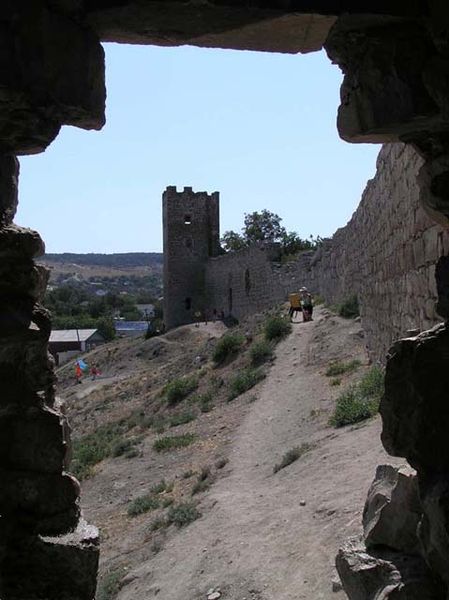
Back on planet Earth, it was theorized that the ancient Crimean city of Feodosiya [founded as Theodosia by Ionian Greek colonists from Miletus in the 6th Century BCE] used an air well constructed of stacks of stones as condensers and terra cotta pipes connected to wells and fountains to supply the city with water.

In the early 1900's,
rock air wells shaped similar to a bell with lots of "windows" were constructed to capture atmospheric humidity. The theory was that the air would be chilled by the rows of slates inside, deposit its moisture on the slates, and then the moisture would trickle from the slates to a collecting basin at the bottom of the well.

Many other water maker ventures were tried over the years with varying degrees of success. One interesting example is the use of
underground tunnels constructed to collect humidity in desert areas, such as Afghanistan, which are now used to evade US troops...

FEATURE

Prescription Drugs found in Drinking Water


AnswerTips-Enabled


Trace amounts of antibiotics, mood stabilizers, anti-convulsants and sex hormones have been found in drinking water across the U.S. following a five month investigation by Associated Press:
In the course of a five-month inquiry, the AP discovered that drugs have been detected in the drinking water supplies of 24 major metropolitan areas -- from Southern California to Northern New Jersey, from Detroit, Michigan, to Louisville, Kentucky.

the concentrations of these pharmaceuticals are tiny, measured in quantities of parts per billion or trillion, far below the levels of a medical dose. Also, utilities insist their water is safe.

But the presence of so many prescription drugs -- and over-the-counter medicines like acetaminophen and ibuprofen -- in so much of our drinking water is heightening worries among scientists of long-term consequences to human health.

There is no federal regulation for testing these drugs in drinking water. In one example, Philadelphia, traces of 56 different drugs were found in the tap water. This included the above mentioned drugs, anti-cholesterol drugs and other pills that Americans take on a regular basis.

As water companies (this includes some bottled waters) and utilities do not routinely filter out these chemicals, which means they are returned to the water systems through the water table, following the reprocessing of waste water from human sources. We are taking these drugs and then depositing the residue into the water table and, ultimately, back into our bodies...

Read the full article

IN THIS ISSUE