Loading...
HOME
POLITICS
CLIMATE
BUSINESS
SCIENCE
WORLD
HISTORY
LIFESTYLE
EDITORIAL
RESOURCES
CONTACT
Showing posts with label History. Show all posts

FEATURE

The Electoral College


AnswerTips-Enabled


The Electoral College Map for 2012, 2016, and 2020
The history of why Hamilton and Adams put the Electoral College in the Constitution tells a different story than is generally known. While the number of senators per state was established to offset the popular vote, the Electoral College was created as a compromise during the Constitutional Congress because southern states had smaller populations of eligible voters than the northern states. 
This was because a large percentage of the southern states' populations were slaves.
The northern states did not have slavery. The working class in the industrial North could vote. The concern of the slave states was that they wouldn't be represented, so a compromise was made called the Electoral Collage where the representation would be made on assigned electors, and not on eligible voting population. 
This gave the slave states equal representation to the Northern States even though a large percentage of their population could not vote. Hamilton and Adams agreed to this to get the Southern States to vote to ratify the Constitution.

For more on the Electoral College, please go to this link→

FEATURE

Who are the Yazidi?


AnswerTips-Enabled


ISIS has attacked the Yazidi people - a sect of the Kurds - in Iraq. The jihadists have driven the survivors to the slopes of Mt. Sinjar, where the Yazidi are running out of food, water and hope, while the ISIS militants advance to wipe them out in what would be a genocide. The White House has just authorized air drops and airstrikes to save them and the U.S. and France have committed to helping the Kurds.

Who are the Yazidi? Why is ISIS after them, why have Sunni and Shi'a attacked them in the past, and why are they at risk of genocide now?

Yazidi on Mt. Sinjar, Iraqi/Syrian Border - 1920's

Historically, the Yazidis are a religious minority of the Kurds. They are said to have existed since 2000 BCE. Estimates of the number of Yazidis vary between 100,000 and 800,000, the latter being the claim of their website. According to the same site, Yazidi refugees in Germany number 30,000.

Researchers believe that the Yazidi religion has elements from Zoroastrianism, Manicheism, Judaism, Christianity, and Islam. The Yazidis call themselves Dasin, not Yazidi. The term 'Yazidism' comes from the Persian word 'īzed', 'angel'. The name Yazidism is connected to the 6th caliph, Yazid (680-83), who, from Shi'a point of view, is one of world history's most hated men, and is highly disliked by most Sunnis, as well. There is little evidence to show what role, if any, Yazid m played in the founding or development of Yazidism.

The Yazidis don't call themselves Yazidis and they're not attached to the 6th Caliph. That hasn't stopped the Sunni and Shi'a from hating them for the name they don't call themselves, as well as for the rumors that they worship the devil.

What are their true beliefs?

FEATURE

Scalia, Cain, and the Machinery of Death


AnswerTips-Enabled


Supreme Court Justice Antonin Scalia 
In 1992 a man named Leonel Herrera, sentenced to death for killing two policemen, asked for a hearing in the federal courts on the basis of recently revealed evidence which, he claimed, established his innocence. A federal court judge stayed his sentence; a panel of three judges of the U. S. Court of Appeals for the Fifth Circuit lifted the stay. Hours before his execution, Herrera appealed to the United States Supreme Court, which agreed to hear his case. Early in 1993, the court, in a six-three vote, ruled against him, and suggested that Mr. Herrera look for clemency from the governor of Texas. Herrera, who insisted upon his innocence until the last minute (“I am an innocent man, and something very wrong is taking place tonight.”), was executed four months later.

Composed in stolid prose with many citations of precedence, the court’s opinion in Herrera v. Collins was written by then Chief Justice William Rehnquist, but it is Senior Associate Justice Antonin Scalia’s concurring opinion, composed with caustic wit, which has become notorious both among those in favor of and those opposed to capital punishment. Scalia, who describes himself as an “originalist” in his interpretation of constitutional law, wrote, “There is no basis in text, tradition, or even in contemporary practice. . . for finding in the Constitution a right to demand judicial consideration of newly discovered evidence of innocence brought forward after conviction.”

Dissenting in Herrera v. Collins, the late Justice Harry Blackmun wrote: “Nothing could be more contrary to contemporary standards of decency or more shocking to the conscience than to execute a person who is actually innocent. . . . We really are being asked to decide whether the Constitution forbids the execution of a person who has been validly convicted and sentenced, but who, nonetheless, can prove his innocence with newly discovered evidence.”

Joined by Justice Clarence Thomas, Justice Scalia offered mocking advice to the three dissenters (Blackmun, Stevens, and Souter): “If the [constitutional] system that has been in place for two-hundred years (and remains widely approved) ‘shocks’ the dissenters’ consciences .. . perhaps they should doubt the calibration of their consciences, or, better still, the usefulness of ‘conscience-shocking’ as a legal test.”

Those unfamiliar with Justice Scalia and his views, told he is a man capable of humor, may imagine that his own conscience is alive to the danger implicit in the moral disaster he recommends, that he doesn’t really mean to kill a potentially innocent man.

Not at all. He is serious, and his view is not without precedent. Continued...


FEATURE

The 600th Anniversary of Prague's Astronomical Clock


AnswerTips-Enabled

The astronomical clock in Prague, a landmark in the architecturally rich city, celebrated its 600th anniversary with a remarkable mapped animation on its face. The clock, called the Orloj, is mounted on the southern wall of Old Town City Hall.

The Orloj has three main components: the astronomical dial, representing the position of the Sun and Moon in the sky and displaying various astronomical details; "The Walk of the Apostles", a clockwork hourly show of figures of the Apostles and other moving sculptures; and a calendar dial with medallions representing the months.  The animation on the clock tower brings the components and Prague's history to life. Continued...


FEATURE

The U.S. Military's 1947 Warning on Intolerance


AnswerTips-Enabled


A film produced by the U.S. Military in 1947 was meant to present the case for the desegregation of the armed forces. Though not initially intended for broadcast to the general public, it speaks to the divisions present in society today.

The production is dated by current standards. The message is prescient given the current strife and division: the ostracization of the "other," whether through protests of mosques, by Glenn Beck's scheduled through-the-looking-glass rally at the Lincoln Memorial on the anniversary of Martin Luther King's "I Have a Dream" speech, or by the funding of climate science denial and extreme tea party activism against the current administration by the Koch Brothers, two of the biggest polluters on the planet.

The film was shot to convince members of the military that desegregation was the right idea. The subsequent integration of African-Americans into the armed forces has since become an integral part of the command structure with our strategy in war. (See: Powell Doctrine).

It now serves as a warning to the future as produced by a military that had fought years of heartbreaking war where millions had lost their lives due to prejudice and intolerance. Continued...

FEATURE

Historic Aerial Footage Reveals the Scope of the BP Gulf Oil Disaster (VIDEO)


AnswerTips-Enabled

On June 21, 2010, Photographer John L. Wathen of Hurricane Creek Keepers went on an extended flight over the Gulf with South Wings pilot, Tom Hutchins and author, David Helbar, to give us the clearest view yet of the BP Gulf Oil Disaster.

The video is heartbreaking but vital for the understanding of the scope and enormity of the disaster.  It shows the sea and the operations underway at the site of the blown well and compares the mitigation efforts to the true size of the disaster and its impact on wildlife:


John Wathen: "This was the most emotionally disturbing video I have ever done. A flight over the BP Slick Source where I saw at least 100 Dolphins in the oil, some dying. I also photographed a Sperm Whale covered in oil all around it's blow hole."
Mr. Wathen asks that concerned parties visit two Gulf funds listed on the video, which is available at this link. 

FEATURE

NASA's Images of the Gulf Oil Spill


AnswerTips-Enabled


NASA's Earth Observatory has been tracking the oil disaster in the Gulf with day-by-day pictures from its satellite:


FEATURE

Zoroastrianism's influence


AnswerTips-Enabled


Today is Newroz (Norooz), the Zoroastrian new year.  For those who have not read of the environmental focus of Zoroastrianism and of its founding influence on the world's primary faiths, a primer:
Zoroastrianism is a religion founded in ancient times by the prophet Zarathushtra, known to the Greeks as Zoroaster.

Zoroastrianism was the dominant world religion from 559 BCE to 651 CE, and was thus the most powerful world religion at the time of Jesus. It had a major influence on other religions and is still practiced world-wide.
Those other religions that Zoroastrianism influenced?

Western Abrahamic (Judaism, Christianity, Islam) and Eastern Dharmic (Hinduism, Buddhism, Jainism, Sikhism) religious traditions, including God, the Devil, sexual equality, evolution, environmentalism, and, my personal favorite, free will...

What is Zoroastrianism?
"Zoroastrianism is the oldest of the revealed world-religions, and it has probably had more influence on mankind, directly and indirectly, than any other single faith." - Mary Boyce, Zoroastrians: Their Religious Beliefs and Practices (London: Routledge and Kegan Paul, 1979, p. 1)

"Zoroaster was thus the first to teach the doctrines of an individual judgment, Heaven and Hell, the future resurrection of the body, the general Last Judgment, and life everlasting for the reunited soul and body. These doctrines were to become familiar articles of faith to much of mankind, through borrowings by Judaism, Christianity and Islam; yet it is in Zoroastrianism itself that they have their fullest logical coherence....” - Mary Boyce, Op. Cit. p. 29.

[1] [2] read more... 

FEATURE

In Praise of Bad Cooking and Good Mothers: A Thanksgiving Memory


AnswerTips-Enabled


I've never been a big fan of Halloween -- I don't scare easy and I don't believe in ghosts, not the spooky kind. Ah, but Thanksgiving! My favorite holiday; one filled with the real ghosts of my childhood. My mother Lilly -- movie star beautiful, generous, kindly -- would roll up the sleeves of her floral printed housedress, put on a clean ironed apron and meet this holiday as her great culinary challenge: that awesome and awful Thanksgiving dinner. And I would watch her in wonder during my childhood in the nineteen thirties and forties.The first order of business was dealing with the turkey from hell, sent to us live in New York City in a crate by my mother's crazy joker of a younger brother, Albert, who lived upstate near the Canadian border. Less a gift than a curse, the bird was exiled to our bathtub for a week, clucking away, fed birdseed and always on the verge of becoming a pet rather than a feast before being snuck out of our house by my father to meet his fate at the local butcher.

When finally presented at the feast the creature was so overcooked by my mother, who didn't believe in timing her cooking, that it had become mummified enough to be worthy of an archeological exhibition. The corpse was surrounded with a neat row of sliced canned cranberry slabs, a culinary sarcophagus. A pile of store bought soft sugary rolls nestled nearby.

Sweet potatoes with half melted marshmallows inside were passed about, and wintery-pale pink sliced tomatoes resting on a cold crunch of iceberg lettuce were offered as sides, while a dish of defrosted Birds Eye creamed spinach (be still my heart) was followed at last by scoops of Rushmeyer's ice-cream fit for any hungry pilgrim.

There was not a dish or a pot in our home that was not used in making that meal. Each contributed to the creation of the overcooked and the underdone. My mother, a truly marvelous woman, was, as I have suggested, an awful cook. And I dare say that was a small part of what made her so marvelous. Continued...

FEATURE

A Death in the Family


AnswerTips-Enabled


John McNamara 1965-2009

This has been a summer for famous people dying. The iconic anchor man Walter Cronkite and Frank McCourt the notable Irish American author of “Angela’s Ashes” recently left the scene. I write here of another Irish American’s death; my nephew by marriage, John McNamara, called Johnny Mac by his friends, who died yesterday after a three year battle with cancer. And what a battle it was. He fought like a champion to stay alive, enduring every form or medical treatment so as to be there for his two year old son Jack and his wife Jennifer. He lost that battle but he left behind a legacy as valuable as that of Cronkite or McCourt; a legacy of helping out in troubled times.


John was a New York City fireman. Plain - but not simple. He worked tirelessly at the cleanup after 9/11, exposing himself to every known and unknown toxin that settled in the air at Ground Zero; toxins undisclosed and misrepresented by our then panicky and disingenuous leaders. It can be truly said that his work there cost him his life. He later rushed to volunteer in New Orleans after Katrina, rescuing people and animals, living in those polluted waters, sending home messages for relief packages for the survivors, and looking for homes for lost dogs. He was that rare creature – an altogether good man who found his deepest pleasure in helping others. Virtue, old fashioned virtue comes in short supply these days; it is so rare that it is often suspected of being faked, but John had it real and in abundance. He lived by his word. Because John made decency seem so easy one mistook it for simplicity, like watching a great athlete or actor – the effortlessness of true talent. His was a genius for kindness. Continued...


[1] [2] read more...

FEATURE

The Modern Meaning of Memorial Day


AnswerTips-Enabled

In the United States, since World War I, the last Monday in May, which was once known as “Decoration Day,” has been known as “Memorial Day.”

While many will be setting up their grills, weather-permitting, and fixing barbeque for friends and family alike, or gathering with friends at restaurants, or in whatever location, thankful for a long weekend and looking forward to the summer, numerous journalists will also be making commentary on what this day means. They will be talking about our soldiers, and whether one is for or against the two wars in which we are currently embroiled, they will be reminding us that those who have fought and died for us, our country, and our freedoms, should be foremost in our minds.

I agree with this wholeheartedly, for whether one is for war or against it, no one should take issue with our veterans themselves and only have inherent respect for an experience none could imagine unless in their shoes. My great-grandfather, a veteran of the Spanish-American War, and WWI on the Western Front, is buried at Arlington National Cemetery. He is buried with others who have marked our country’s sacrifice in the midst of conflict.

But I would also like to make commentary on something that we should also be thinking about on this day. Let me amend that to say this day, and perhaps on every other, particularly for those of us who live in the West.

Earlier this month, on May 3rd, was World Press Freedom Day. It was a day that came and went to little fanfare. Even in this day when Iran is limiting or ceasing people’s access to Facebook during elections—where they should be able to communicate freely and exchange information about candidates—to the arrest and imprisonment of an Iranian-American journalist, Roxane Sabieri, who was accused of spying against Iran (who sang the American anthem to give herself strength during the ordeal), freedom of speech and freedom of the press have never been such important issues as they are now. Now, in this information age, this age of instant communication via varying means from SMS, email, Facebook and other social networking sites, IM, Skype, mobile phones and video conferencing, freedom of information has never been easier and more immediate. However, in most countries around the world, it is still limited.  Continued...

[1] [2] read more...


FEATURE

How My Mother Fooled Me


AnswerTips-Enabled


I was one of the lucky ones. I had a great mother. The fact that I did not fully appreciate that until after her death makes me typical -- I fear -- rather than special among sons. She easily forgave my obsession with my work, more than I now forgive myself for not making more of that time we had together.

I'm sure I sent her a card on Mother's Day, and I remembered her birthday -- October 13th -- and I bought her Christmas gifts (here with some help from my wife) but I regarded these as chores rather than pleasures. What do you buy for a woman whose only fashion weakness was earrings? More earrings? No, I did not neglect her. I lived a few blocks from her apartment and saw her once a week when I was in New York, mostly for dinner and to talk about the fortunes and misfortunes of our family. Most of all she expressed such pride in my young sons that she could never get enough of them. Although she was a constant presence in my life, I did not then realize that she was the great foundation on which my life was built.   Continued...

FEATURE

Who are the Kurds?


AnswerTips-Enabled


A friend who'd heard that I'd spent time with the Kurds once asked me, 'who are they?' That query led to this post.

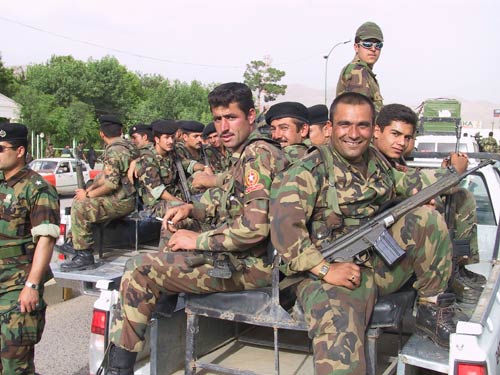
With President Obama's focus on Turkey, the withdrawal of our troops from Iraq and the threat of increased instability in the region, the question has again become pertinent. Who are the Kurds? Who are these Middle Eastern people that have both men and women in their army? These mountain warriors that many refer to as the best fighters in the Middle East; these ancient people whom claim descent from the Biblical Medes and count among their number: Saladin, the Muslim leader who defeated Richard the Lionheart and, more recently (through her mother), the late Benazir Bhutto.

Kurdish Chieftain c. 1885

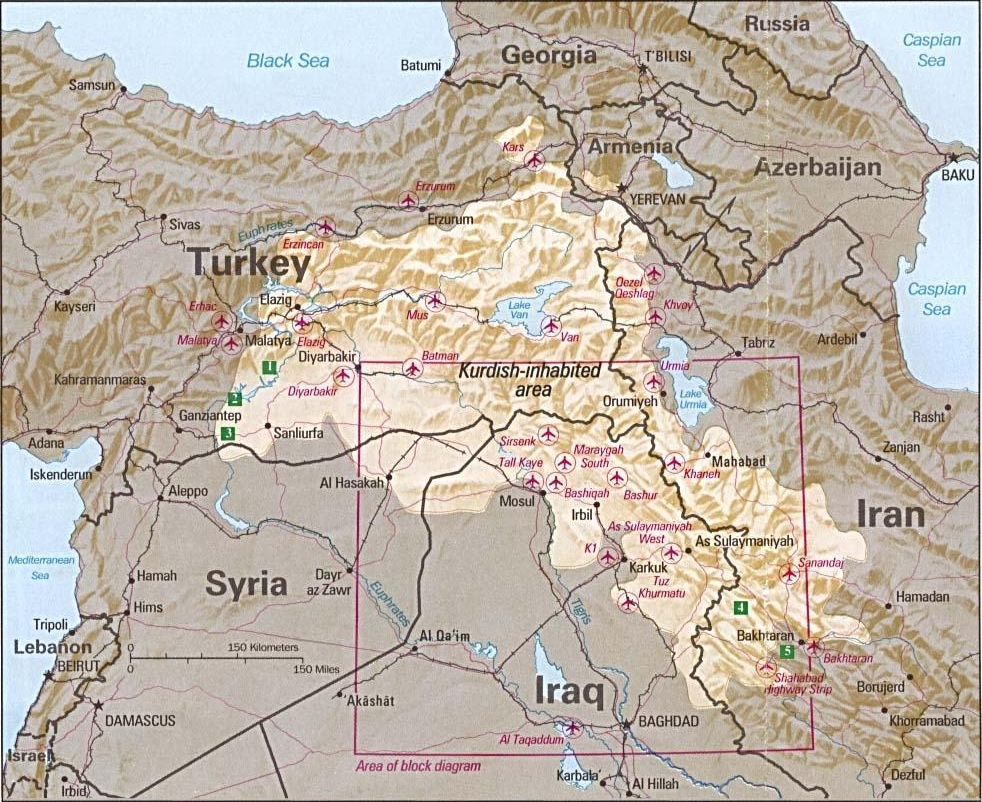
Kurds were once a mostly nomadic people living around the mountainous regions of Iraq, Iran, Turkey and Syria. Mostly Sunni (there are Kurdish Shi'a, Alevi, Yazidi, Jews, Zoroastrians, Christians, etc), they are known to hold their Islam with a light touch. Promised an autonomous Kurdistan under the terms of the 1920 Treaty of Sevres, they saw it rescinded under the 1923 Treaty of Lausanne.

The resultant division of their historical homeland between Turkey, Iraq, Iran and Syria left somewhere between 25 and 40 million Kurds as the world's largest stateless minority. This has led to an an alphabet soup of alliances as the Kurds struggle to survive in a world of shifting allegiances... Continued...

[1] [2] read more...

Deniability: Facing the War on Terror through Poetry


AnswerTips-Enabled


There are times in history when it is best for a people to move on from past mistakes. There are other times, such as now, when the past cries out to be explored. For those who are searching for meaning to the last eight years, a new book by American poet, George Witte, Deniability, is the place to start. This is not only for the writing that is spectacular in its simplicity, its perfect placement of each word, its prose, but for its bravery in peeling back the layers of the war on terror as an eight year journey that is stark and unforgiving in its verse.

It is, in this writer's opinion, required reading before we move on, an inner truth and reconciliation to the last eight years that serves as an important reminder of what we must face and not allow again.

George Witte's Deniability begins with the fall of the Twin Towers, a poem appropriately entitled: Uh-Oh, reflecting the feeling so many experienced as they watched the attacks on 9/11, and proceeds chronologically through the physical, actual and psychological journey that would come to be known as the war on terror.
UH-OH (excerpt): No photograph records that day's unmasking roar / Things ripped from skins, words from definitions. / Letters distilled until incomprehensible.
I first became familiar with the author's work when I stumbled across Witte's previous collection, The Apparitioners, and was so impressed by its form and substance, its free-flowing exploration of American life that led one reviewer to refer to Witte as the "Frost of the Suburbs," that I purchased several copies for friends and have reread it many times since. It was therefore with anticipation that I awaited my copy of Deniability as a new and unique linguistic presentation that would cause me to think about American life.

What I found was a chronological exploration of American conscience through the last eight years of war and terror that makes Deniability more than just a great book of poetry (and it is). George Witte's new collection is the best opportunity I've seen for Americans to peel back the layers on their own experience of the last eight years. Continued...


FEATURE

President Obama's Inaugural Address


AnswerTips-Enabled


My fellow citizens:

I stand here today humbled by the task before us, grateful for the trust you have bestowed, mindful of the sacrifices borne by our ancestors. I thank President Bush for his service to our nation, as well as the generosity and cooperation he has shown throughout this transition.


Forty-four Americans have now taken the presidential oath. The words have been spoken during rising tides of prosperity and the still waters of peace. Yet, every so often the oath is taken amidst gathering clouds and raging storms. At these moments, America has carried on not simply because of the skill or vision of those in high office, but because We the People have remained faithful to the ideals of our forbearers, and true to our founding documents.


So it has been. So it must be with this generation of Americans.


That we are in the midst of crisis is now well understood. Our nation is at war, against a far-reaching network of violence and hatred. Our economy is badly weakened, a consequence of greed and irresponsibility on the part of some, but also our collective failure to make hard choices and prepare the nation for a new age. Homes have been lost; jobs shed; businesses shuttered. Our health care is too costly; our schools fail too many; and each day brings further evidence that the ways we use energy strengthen our adversaries and threaten our planet.


These are the indicators of crisis, subject to data and statistics. Less measurable but no less profound is a sapping of confidence across our land - a nagging fear that America's decline is inevitable, and that the next generation must lower its sights.


Today I say to you that the challenges we face are real. They are serious and they are many. They will not be met easily or in a short span of time. But know this, America - they will be met.


Continued...


FEATURE

FDR - First Inaugural Address


AnswerTips-Enabled

An ongoing history series; the following is the first inaugural address by Franklin Delano Roosevelt, in which we find parallels to our situation today:

"
I am certain that my fellow Americans expect that on my induction into the Presidency I will address them with a candor and a decision which the present situation of our Nation impels. This is preeminently the time to speak the truth, the whole truth, frankly and boldly. Nor need we shrink from honestly facing conditions in our country today. This great Nation will endure as it has endured, will revive and will prosper.

So, first of all, let me assert my firm belief that the only thing we have to fear is fear itself--nameless, unreasoning, unjustified terror which paralyzes needed efforts to convert retreat into advance. In every dark hour of our national life a leadership of frankness and vigor has met with that understanding and support of the people themselves which is essential to victory. I am convinced that you will again give that support to leadership in these critical days.

In such a spirit on my part and on yours we face our common difficulties. They concern, thank God, only material things. Values have shrunken to fantastic levels; taxes have risen; our ability to pay has fallen; government of all kinds is faced by serious curtailment of income; the means of exchange are frozen in the currents of trade; the withered leaves of industrial enterprise lie on every side; farmers find no markets for their produce; the savings of many years in thousands of families are gone.

More important, a host of unemployed citizens face the grim problem of existence, and an equally great number toil with little return. Only a foolish optimist can deny the dark realities of the moment.

Yet our distress comes from no failure of substance. We are stricken by no plague of locusts. Compared with the perils which our forefathers conquered because they believed and were not afraid, we have still much to be thankful for. Nature still offers her bounty and human efforts have multiplied it. Plenty is at our doorstep, but a generous use of it languishes in the very sight of the supply. Primarily this is because the rulers of the exchange of mankind's goods have failed, through their own stubbornness and their own incompetence, have admitted their failure, and abdicated. Practices of the unscrupulous money changers stand indicted in the court of public opinion, rejected by the hearts and minds of men.

True they have tried, but their efforts have been cast in the pattern of an outworn tradition. Faced by failure of credit they have proposed only the lending of more money. Stripped of the lure of profit by which to induce our people to follow their false leadership, they have resorted to exhortations, pleading tearfully for restored confidence. They know only the rules of a generation of self-seekers. They have no vision, and when there is no vision the people perish.

The money changers have fled from their high seats in the temple of our civilization. We may now restore that temple to the ancient truths. The measure of the restoration lies in the extent to which we apply social values more noble than mere monetary profit.

Happiness lies not in the mere possession of money; it lies in the joy of achievement, in the thrill of creative effort. The joy and moral stimulation of work no longer must be forgotten in the mad chase of evanescent profits. These dark days will be worth all they cost us if they teach us that our true destiny is not to be ministered unto but to minister to ourselves and to our fellow men.

Recognition of the falsity of material wealth as the standard of success goes hand in hand with the abandonment of the false belief that public office and high political position are to be valued only by the standards of pride of place and personal profit; and there must be an end to a conduct in banking and in business which too often has given to a sacred trust the likeness of callous and selfish wrongdoing. Small wonder that confidence languishes, for it thrives only on honesty, on honor, on the sacredness of obligations, on faithful protection, on unselfish performance; without them it cannot live.

Restoration calls, however, not for changes in ethics alone. This Nation asks for action, and action now.

Our greatest primary task is to put people to work. This is no unsolvable problem if we face it wisely and courageously. It can be accomplished in part by direct recruiting by the Government itself, treating the task as we would treat the emergency of a war, but at the same time, through this employment, accomplishing greatly needed projects to stimulate and reorganize the use of our natural resources.

Hand in hand with this we must frankly recognize the overbalance of population in our industrial centers and, by engaging on a national scale in a redistribution, endeavor to provide a better use of the land for those best fitted for the land. The task can be helped by definite efforts to raise the values of agricultural products and with this the power to purchase the output of our cities. It can be helped by preventing realistically the tragedy of the growing loss through foreclosure of our small homes and our farms. It can be helped by insistence that the Federal, State, and local governments act forthwith on the demand that their cost be drastically reduced. It can be helped by the unifying of relief activities which today are often scattered, uneconomical, and unequal. It can be helped by national planning for and supervision of all forms of transportation and of communications and other utilities which have a definitely public character. There are many ways in which it can be helped, but it can never be helped merely by talking about it. We must act and act quickly.

Finally, in our progress toward a resumption of work we require two safeguards against a return of the evils of the old order; there must be a strict supervision of all banking and credits and investments; there must be an end to speculation with other people's money, and there must be provision for an adequate but sound currency.

There are the lines of attack. I shall presently urge upon a new Congress in special session detailed measures for their fulfillment, and I shall seek the immediate assistance of the several States.

Through this program of action we address ourselves to putting our own national house in order and making income balance outgo. Our international trade relations, though vastly important, are in point of time and necessity secondary to the establishment of a sound national economy. I favor as a practical policy the putting of first things first. I shall spare no effort to restore world trade by international economic readjustment, but the emergency at home cannot wait on that accomplishment.

The basic thought that guides these specific means of national recovery is not narrowly nationalistic. It is the insistence, as a first consideration, upon the interdependence of the various elements in all parts of the United States--a recognition of the old and permanently important manifestation of the American spirit of the pioneer. It is the way to recovery. It is the immediate way. It is the strongest assurance that the recovery will endure.

In the field of world policy I would dedicate this Nation to the policy of the good neighbor--the neighbor who resolutely respects himself and, because he does so, respects the rights of others-- the neighbor who respects his obligations and respects the sanctity of his agreements in and with a world of neighbors.

If I read the temper of our people correctly, we now realize as we have never realized before our interdependence on each other; that we can not merely take but we must give as well; that if we are to go forward, we must move as a trained and loyal army willing to sacrifice for the good of a common discipline, because without such discipline no progress is made, no leadership becomes effective. We are, I know, ready and willing to submit our lives and property to such discipline, because it makes possible a leadership which aims at a larger good. This I propose to offer, pledging that the larger purposes will bind upon us all as a sacred obligation with a unity of duty hitherto evoked only in time of armed strife.

With this pledge taken, I assume unhesitatingly the leadership of this great army of our people dedicated to a disciplined attack upon our common problems. Continued...

My Mother: A Nana for Obama


AnswerTips-Enabled


I can truly say that I was the youngest person in America to vote for FDR in his first term election. When she pulled the lever for Roosevelt I was in my mother’s womb, so I suppose I could be called an intra-utero Democrat. My mother, Lillian Yellen, is long gone now. Had she lived she would be one hundred and five and voting for Obama. She was run down by a reckless driver in Manhattan twenty five years ago as she was bringing some food to a poor, sick woman who was a member of her Hadassah group. That driver jumped the curb while she was waiting for a light to change and took her life. Mother was eighty at the time. We rented the smallest room in the Riverside Chapel for the funeral service knowing that she had outlived most of her friends and family and believing that few would come to the ceremony of a private woman who was not famous. But to our amazement the room soon overflowed with so many people we had never met, and we were obliged to hold the service in the largest room available for the many whose lives she had touched with her wisdom and quiet generosity, the many who came to pay her tribute.The reason for this crowd was simple. Mother cared about the welfare of others on both a personal and a political level, and she did it naturally, graciously. Generosity was her gift, her talent, her life’s work. She simply helped those in need on a daily basis, and her politics were simple: vote for people and programs that would improve the lives of those in need. And since such progressive programs were “good for the Jews” it was an easy decision for her to make.

As a three year old Jewish child who had escaped the pogroms of Russia, she understood oppression, and as an adult who had seen the consequences of the Holocaust she cared deeply about the fate of Israel as a homeland for the survivors. My mother, Lilly, had grown up in great poverty and knew life shattering tragedy early on. As a nine year old child she experienced within a year the loss of her mother, her older sister and brother to the “white death” of tuberculosis when they lived in squalid conditions on the Lower East Side. Her first school teacher was a Miss Emily Stokes, a young African American woman who favored the beautiful motherless Lilly, helping her with her lessons, teaching her the lovely flowing handwriting she used for a lifetime, and giving her a wonderful rag-doll, the only doll my mother would ever own. That personal experience Lilly had of the daughter of a former slave taught my mother to see beyond skin color to the value of the humanity within.


[1] [2]

FEATURE

Earth Day 2008


AnswerTips-Enabled


The U.N. celebrates an Earth Day on the March equinox, as founded by peace activist John McConnell in 1969. A second Earth Day, founded by Senator Gaylord Nelson, is celebrated on April 22.
In September 1969, at a conference in Seattle, Washington, U.S. Senator Gaylord Nelson of Wisconsin announced that in the spring of 1970 there would be a nationwide grassroots demonstration on the environment. Senator Nelson first proposed the nationwide environmental protest to thrust the environment onto the national agenda.” "It was a gamble," he recalls, "but it worked."
The U.S. State Department's America.Gov site ("telling America's story") has an article entitled: "What is Earth Day?"
Washington -- Earth Day, April 22, is the annual U.S. celebration of the environment and a time for Americans to assess the work still needed to protect the natural gifts of our planet. Earth Day has no central organizing force behind it, though several nongovernmental organizations work to keep track of the thousands of local events in schools and parks that mark the day. It affirms that environmental awareness is part of the country's consciousness and that the idea of protecting the environment -- once the province of a few conservationists -- has moved from the extreme to the mainstream of American thought.
There are Earth Day activities world wide, including observances by:

FEATURE

A Life Well Lived


AnswerTips-Enabled

Cross-posted on The Huffington Post

My mom passed away last week. I would deal with the difficulty of this loss without writing about it if it weren't for the fact that she was too extraordinary for silence. Not because she was my mother, but in deference to a remarkable person who lived through iconic times and left her mark upon them.

You see, Rosalie Ritz was a reporter and courtroom artist who covered trials for Associated Press and CBS ranging from the McCarthy hearings to Sirhan, from the Pentagon Papers to Patty Hearst to the OJ civil trial. My mother was also a painter and a sculptor who placed in juried shows at the Corcoran, the Smithsonian and Flower Galleries, with many of her courtroom sketches finding a home at UC Berkeley's Bancroft Library.

LOS ANGELES (AP) - Rosalie Ritz , a premier courtroom artist who for four decades chronicled dozens of high-drama trials, including those of Charles Manson, Patty Hearst and O.J. Simpson, has died...An accomplished artist while still in her teens, Ritz began sketching live events when she was living in Washington, D.C., and got into a closed session of the House Un-American Activities Committee hearings. A CBS-TV producer offered to buy her sketches, and they were shown on the Edward R. Murrow news show.

An artist's work lives beyond them. I know this. I also know another side to the terrific woman who was my mother and who was such a large part of our lives. I know this through my experience as the youngest of her four daughters and through her photographs and her memories: The worried child, the seventh of ten children, whose father died when she was nine, leaving her mother to face the Depression with her large brood alone; the fresh-faced seventeen year-old who drew portraits with fellow artists during the Second World War; the brief foray as a sought-after starlet who bore a striking resemblance to a young Ann Bancroft; the queen of the dance who'd charmed the young athlete just home from the war, a handsome hero who courted her by walking on his hands down the steps of a Washington D.C. monument and swam across a lake to prove himself to her.

My father asked two things of my mother when he proposed to her: Learn to play golf, learn to play bridge. She loved him enough to marry him despite the un-artist-like requests. But he must have seen her potential, because she became a scratch golfer, the best any of us have seen, a swing was that pure its accuracy. She also regularly beat my father at bridge, hoist on his own petard, as it were, as she struggled to raise the first two of her four dynamic and rambunctious daughters while her patriotic husband fought the rising paranoia of the McCarthy years.

Her entry to that world came when she brought her sketchpad and drew the scenes as his patriotism was challenged and then emphatically reaffirmed; a series of sketches that went on to become a career.

This came through a promise my father (whose story is just as remarkable) made to himself during the Korean War; a stopover in San Francisco that became a yearning to move there. A wish fulfilled fifteen years later when a career opportunity presented itself; not an easy proposition for his wife, an artist growing in popularity in our nation's capital, to pack up and follow her husband across the country to his new job in public service with her young children in tow.

But she did it.

I can remember, as a little girl, stopping at the door of the plane (no loading bridges then), blinking up at the deep blue of the California sky. Our family getting lost on the drive from the airport to the East Bay, a side trip through Berkeley that was fascinating to me and worrisome to my mother. A new world without friends or family or career.

She found schools for her daughters, fixed up the house that took three months to be ready, introduced us to California artichokes dipped in butter, painted a remarkable golden tree on an interior wall to give the new house character and then found herself as she sat on a bench and sketched the colorful characters that inhabited the Haight-Ashbury district of the late sixties.

The sketches were picked up by a city magazine and then in the city newspaper. Talent that could not be ignored. From there, a local news station contracted her to sketch a trial and then another and another (there were so many big trials in California those days). Then the wire services took notice, a career reborn that included facing some of the best and worst of history, sketching entire scenes in minutes, emotions and action, rushing to the station to turn her work in, then rushing home to feed us.

During which she was presented the AP Award of Excellence.

My job as her youngest was two-fold: one assigned by my mother and another I took upon myself. The former, to sharpen her colored pencils in the morning (manually -- I look upon the automatic sharpener as one of the great inventions in history), the latter to quietly break my mother's cigarettes in two and place them back in each new carton and then to run like the devil that I was to the pasture where I kept the horse she had gotten for me. I would lay upon my equine friend's back while he ate and I read my latest book -- I lived for books then -- and look up to find her leaning on the fence with a look on her face that said: how are we going to work this out?

We fought about it for a while, that period of time every mother and daughter faces when they're trying to figure each other out. Then, finally, we talked about it. She'd been given the cigarettes during the Second World War, like so many of her generation, tricked into an addiction that was not in her personality, a chemical dependency, the anger at which was the nascent beginnings of my environmentalism. Then she did what she always did. Took the trouble to think about my concerns.

And in the middle of her stress and her work and her responsibility to take care of her children, she threw out the cigarettes and never smoked again.

More trials and triumphs followed in my parents' work and in their lives. A famous boxer (before he was famous) that both my parents believed in and supported; my father's decision to begin his own business; the drug addiction recovery foundation they helped to become established; the many friends that covered trials with my mother, reporters and lawyers who would fill our house with literate and erudite conversation. Her fascination with politics, the careful reading of newspapers, the discussions of the latest 60 Minutes episodes, a ritual in our household; the patience my mother showed as I began to show abilities with music and writing, the way she would shush others and listen with an understanding at the deep place I was exploring, a muse with which she was exceedingly familiar.

I can remember, as a three year old, one of my earliest memories (the other was climbing up to my father's chair while he was reading and identifying the word "the" on the page), standing at the door of my mother's studio to let her know I had to go and her expression, torn between helping me and the desire to sculpt my pleading face with the clay in her hands.

She did both.

My mother once gave me a book, Chaim Potok's My Name is Asher Lev, the story of an artist torn between the obligation of his cultural tradition and his talent. I knew, as I read it, this was her story and it would have been mine, had she not warned me to face my art and my life and to realize that I would be required to balance the two.

"My girls can do anything they put their mind to." That's what she would tell us. My sisters, each of them accomplished and amazing women, lived up to that prediction better than I have, but she gave me the courage to believe that I could.

It was the cigarettes that got her in the end, though she'd quit decades earlier, after a life well lived and the loss of the beloved husband she'd shared her life with for sixty-one years of marriage. I told one of my sisters, as we faced the numbing truth that this elegant pillar of strength would no longer be with us, our lives would be boring without her. Her art will live on. Our love of this country, our fascination with its politics, her unique way of looking at the world, all that will live on through her children, her grandchildren and a new great-granddaughter she faced her illness to meet. It was her courage that sustained her in the end and it was impressive. Life will be more boring without her.

Rest in peace, Mom.


FEATURE

History Lessons


AnswerTips-Enabled

Cross-posted on The Huffington Post

In her recent speech at the Conference on World Affairs, Rachel Maddow cited James Madison's warning about the unitary executive, the propensity of an unchecked executive branch to lean toward war, whereas the legislature would be more likely to debate the issue before moving toward conflict.

Maddow's supposition, that the Bush administration's seeming incompetence, its torture memos, its rush to war, was by design -- Bush and Cheney's direct effort to shift power to the executive and, thereby, to shift the entire country to a more warlike stance -- does have historical precedence.

I'm not referring to Madison, though he did warn of this, or Jefferson, who raised prescient concern about undue influence, but earlier in history to the systems that Madison and Jefferson used as the inspiration for their grand experiment: The Roman Republic of Caesar's time and the Greek democracy of Solon.

This is not to say that George W. Bush is Julius Caesar or that any of his lawgivers (like the ones who approved that torture memo) are Solon. But there are interesting parallels to the way that Caesar and his contemporaries used war to further their wealth and political ambitions, as well as to the actions that Solon's contemporaries took to undermine codified law.

Need a better seat in the Roman Senate? Get yourself posted to Hispania (Spain). Need funds to run a campaign for consul (president) or junior consol (vice-president)? Go to war with Gaul (France).

Need to prove yourself in an ill-timed, ill-thought out adventure in Parthia (Syria, Iraq, Iran)? Be like Crassus and attack preemptively and get your army decimated in the process.

For Solon, the author of democracy? Have a law that your opponents don't like? Make it good for ten years after you leave office. Solon did that with laws we'd likely support (limiting unfair financial practices toward the poor...). Bush? Tax cuts for the rich. Which would have been fine with the corporate interests in Greece (known as oligarchs - that's where the word comes from), who made sure Solon's attempts at fairness wouldn't last by overthrowing his protégé, Pisistratus, leading to periods of instability broken only by the need for the people came together to fight a common enemy (interchangeable between Persia, the Peloponnesians, Philip of Macedonia...).

Alexander and his successors put a stop to that (for a while), after which, Rome reduced Greece to a province in their march to rule the world. But the struggles between the wide ideals of democracy and the narrow interests of oligarchy have never gone away. Indeed, it should be familiar to those who look askance at the hundreds of millions of dollars required to run a presidential campaign and are now (finally) questioning how the common interests of the people could have any meaning in such an environment...

IN THIS ISSUE