Loading...
HOME
POLITICS
CLIMATE
BUSINESS
SCIENCE
WORLD
HISTORY
LIFESTYLE
EDITORIAL
RESOURCES
CONTACT
Showing posts with label Turkey. Show all posts

FEATURE

Falling Oil Prices Threaten a Key Ally in Fight Against ISIS


AnswerTips-Enabled

by Janet Ritz

Erbil (Arbil) Citadel of Hewlêr
Iraq's Kurdish Autonomous Region

Photo: Jim Gordon

Qubad Talabani, Deputy Prime Minister of Iraq's Kurdish Regional Government, has issued an urgent warning that falling oil prices, combined with the costs of war and of housing refugees, is threatening the Kurdish Peshmerga's ability to fight ISIS (Daesh).

"The world is focused on the war against ISIS but nobody wins a war bankrupt," Talabani states. "I think this is something the coalition against ISIS really do need to factor into the equation."

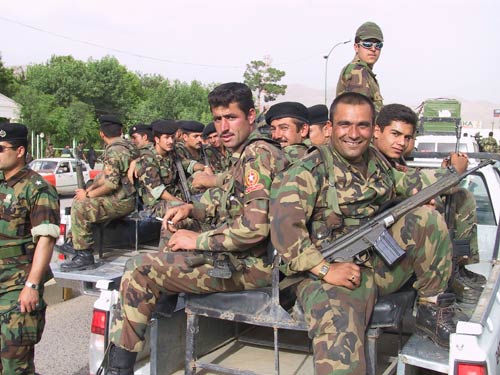
The Kurdistan Autonomous Region (KRG), the front line against Daesh (ISIS) in Northern Iraq, which has seen ongoing gains by their Peshmerga with coalition air support, recently cut Daesh's supply line between Mosul and Raqqa. This makes the Peshmerga a key ally in the fight against the Islamic State, and our "boots on the ground" in Northern Iraq. However, as Talabani warns, "The most dangerous impact [of the oil price crash] it can have is on morale. We are getting desertions. People are leaving their posts -- it will increase."

FEATURE

"A Success Story in the Middle East"


AnswerTips-Enabled


Qubad Talabani
In a recent conversation with Qubad Talabani, the Kurdish representative to the U.S. for their regional government, we discussed what the son of Iraq's President Jalal Talabani called the U.S.'s success story in the Middle East. It was during an interview that covered politics, religion, Turkey, Iran, and the Kurdish attitude toward the U.S. for their involvement in Iraq.

As Qubad Talabani stated, "there is a success story in the Middle East that has significant U.S. fingerprints on it and I can't point to too many of those right now in the Middle East. "  Continued...


[ [1] 2 ]  read more →

FEATURE

Who are the Kurds?


AnswerTips-Enabled


A friend who'd heard that I'd spent time with the Kurds once asked me, 'who are they?' That query led to this post.

With President Obama's focus on Turkey, the withdrawal of our troops from Iraq and the threat of increased instability in the region, the question has again become pertinent. Who are the Kurds? Who are these Middle Eastern people that have both men and women in their army? These mountain warriors that many refer to as the best fighters in the Middle East; these ancient people whom claim descent from the Biblical Medes and count among their number: Saladin, the Muslim leader who defeated Richard the Lionheart and, more recently (through her mother), the late Benazir Bhutto.

Kurdish Chieftain c. 1885

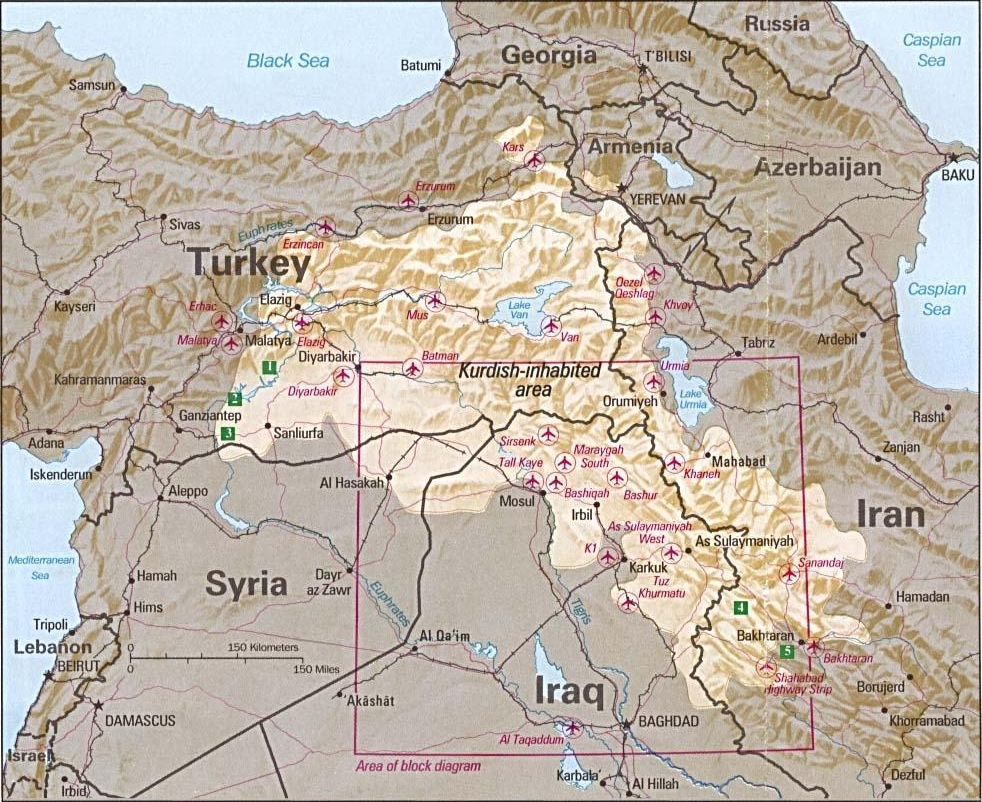
Kurds were once a mostly nomadic people living around the mountainous regions of Iraq, Iran, Turkey and Syria. Mostly Sunni (there are Kurdish Shi'a, Alevi, Yazidi, Jews, Zoroastrians, Christians, etc), they are known to hold their Islam with a light touch. Promised an autonomous Kurdistan under the terms of the 1920 Treaty of Sevres, they saw it rescinded under the 1923 Treaty of Lausanne.

The resultant division of their historical homeland between Turkey, Iraq, Iran and Syria left somewhere between 25 and 40 million Kurds as the world's largest stateless minority. This has led to an an alphabet soup of alliances as the Kurds struggle to survive in a world of shifting allegiances... Continued...

[1] [2] read more...

FEATURE

Who are the Kurds?


AnswerTips-Enabled


Cross-posted on Reuters, The Huffington Post


A year ago, a friend who'd heard that I'd spent time with the Kurds asked me, 'who are they?' That query led to this post.

After reading Bill Clinton's statement regarding the need for troops in the Kurdish north because Turkey doesn't "like the fact that the PKK guerrillas sometimes come across into northern Iraq" and the news that Turkey crossed to border to take on the PKK, it seemed time to revisit the question.

Kurdish Chieftain c. 1885

Who are the Kurds? Who are these Middle Eastern people that have both men and women in their army? These mountain warriors that many refer to as the best fighters in the Middle East; these ancient people whom claim descent from the Biblical Medes and count among their number: Saladin, the Muslim leader who defeated Richard the Lionheart and, more recently (through her mother), the late Benazir Bhutto.

Kurds were once a mostly nomadic people living around the mountainous regions of Iraq, Iran, Turkey and Syria. Mostly Sunni (there are Kurdish Shi'a, Alevi, Yazidi, Jews, Zoroastrians, Christians, etc), they are known to hold their Islam with a light touch. Promised an autonomous Kurdistan under the terms of the 1920 Treaty of Sevres, they saw it rescinded under the 1923 Treaty of Lausanne.


The resultant division of their historical homeland between Turkey, Iraq, Iran and Syria left between 25 and 40 million Kurds as the world's largest stateless minority. This has led to an an alphabet soup of alliances as the Kurds struggle to survive in a world of shifting allegiances...


FEATURE

US to Turkey: Stay out of Iraq


AnswerTips-Enabled


Turkey and America's strategic partnership is at risk because of the growing tension between the Turkish army on the border of Iraq and the ~3,000 outlawed PKK Kurdish fighters said to be using the mountainous region as a base from which to strike inside Turkey:
The Turkish government is seeking parliamentary approval for a possible cross-border military operation to hunt down Kurdish separatists in Iraq. Prime Minister Recep Tayyip Erdogan is under pressure to act from a Turkish public outraged by rebel attacks that have killed 15 soldiers since Sunday.

Iraq said that the best way to confront the rebels was through a security accord signed with Turkey last month. The US also warned Turkey against making an incursion into northern Iraq.

"If they have a problem, they need to work together to resolve it," said state department spokesman Sean McCormack. [Link] [Video]

Kurdish residents in the Iraqi border region report intermittent shelling from Turkey. The Turkish military has not denied this and has said they have the right to go in ... [more]


FEATURE

US to Turkey: Stay out of Iraq


AnswerTips-Enabled


Turkey and America's strategic partnership is at risk because of the growing tension between the Turkish army on the border of Iraq and the ~3,000 outlawed PKK Kurdish fighters said to be using the mountainous region as a base from which to strike inside Turkey:
The Turkish government is seeking parliamentary approval for a possible cross-border military operation to hunt down Kurdish separatists in Iraq. Prime Minister Recep Tayyip Erdogan is under pressure to act from a Turkish public outraged by rebel attacks that have killed 15 soldiers since Sunday.

Iraq said that the best way to confront the rebels was through a security accord signed with Turkey last month. The US also warned Turkey against making an incursion into northern Iraq.

"If they have a problem, they need to work together to resolve it," said state department spokesman Sean McCormack. [Link] [Video]

Kurdish residents in the Iraqi border region report intermittent shelling coming from Turkey. The Turkish military has not denied this and has said they have the right to go in if they're in hot pursuit of fleeing PKK fighters following a military engagement.

The Kurds have warned them to keep out.

This comes after a security agreement signed between Iraq and Turkey, the nature of which is an assurance from Iraq that they will address the PKK camps, was put in place. However, with two attacks inside Turkey coming out of the border camps in the last few weeks, the Turkish public, government and, especially, its army is either losing patience or using the threat of force to push the Iraqis to stop the PKK themselves.

Further exacerbating the situation, the US warning comes at a time when the Congress is to vote on a bill to recognize the long denied Armenian genocide. The Turkish government, which has arrested its citizens in the past for talking about it and is under pressure from their growing nationalist faction to continue that practice, has let the US know they will return "insult for insult" by limiting the vital access to the large NATO base within Turkey's borders.

The recognition of the genocide, while long overdue, is a non-binding resolution that the Bush Administration has stated they do not support. Whether that will be enough to keep the Turks from reacting and/or their nationalists from using the issue to stir up dissent, remains to be seen.

What is not in doubt: If Turkey does cross the border into Iraq without the Kurdish Regional Government's permission (note: they have given such permission in the past, so it is possible that similar negotiations are taking place behind the scenes), it could lead to a regional escalation between two of the United States' most important allies (Turkey and Kurdistan) at a time when there are more than enough battles to strain everyone's resources.

Here's the link to the BBC video.

And to more about the Kurds.

FEATURE

Turkey Prays for Rain


AnswerTips-Enabled

Turkey has long been known as the crossroads of the world; an ancient land where Greek philosophy was born, where Cyrus the Great battled King Croesus for supremacy, where Alexander the Great won his first battle against the Persian Empire and where, according to Plutarch, Julius Caesar spent thirty-eight days as a prisoner of the Cilician Pirates, only to return and crucify them all upon his release.

It's difficult for me to separate my fascination for Turkey's past from the complexities of its present: The anger that Turkish minorities (Kurds and Armenians) have for their government, the necessity of the west to keep Turkey as an ally (and out of Iraq), the tug of war between the growing Islamic population in their manufacturing center and the freewheeling populations of their cosmopolitan coastal regions.
A situation that has grown more complex after what is being called an act of God:

The Turkish capital, which is suffering from drought and serious water shortages. Record-low snow and rainfall this past winter, coupled with searing summer temperatures, have shrunk the reservoirs of Ankara, a city of some 4 million people, leaving just enough water to last another three months.

This is not a simple drought. It is an absence of precipitation coupled with record temperatures and water-source-overuse (an act of Man) from agriculture that has resulted in extreme rationing, with water supplies cut off from the population for days at a time.

The Mayor of Ankara has gone so far as to suggest that his constituents take a vacation to other parts of Turkey while 750 of the cities' Mosques gather the faithful to pray for rain:

"We stand before you, we beg you to answer our prayers," said Fikret Latifoglu, the Imam of the Hacibayram mosque, one of the city's oldest, in leading special prayers for rain before the start of traditional Friday prayers. "Don't leave innocent children and the old, animals who cannot speak for themselves, the trees, the ants and the birds without water. We helplessly beg for Your mercy."

This is a population that is already torn between growing Islamic adherents, competing secularists, and right wing nationalists that have raised alarm bells across their country following the murder of Turkish-Armenian journalist Hrant Dink, who was well-known for writing articles about the mass killing of Armenians by Turks in 1915:

"We are all Hrant Dink. We are all Armenians," Turkish demonstrators furious at the murder chanted.

There are the Kurds, who comprise a significant portion of the population, with a small, growing percentage of their youth joining the US/EU designated terrorist group, the PKK, encamped across the border in the mountains of Iraqi Kurdistan.

All of which indicates an increasingly complex Turkish national identity. A secular nation with a growing Islamism, those were the Turks from the varied backgrounds who demonstrated in support of the assassinated Armenian-Turkish journalist who'd criticized them; their secular military that had threatened a coup last spring if their Islamic Foreign Minister was appointed president; a long oppressed Kurdish minority with an outlawed terrorist faction, who, for the first time in twenty-six years, had twenty pro-Kurdish politicians elected to parliament:

Now the party of the aforementioned Turkish Foreign Minister, Abdullah Gul, whose nomination for president sparked protests that filled their streets with secularists fearfull of his Islamic connections (coupled with the threat from the secular military if he didn't withdrawal), has won the majority in the recent elections and Gul has just been elected to the secular post.

The Turkish armed forces said Monday that efforts were being made daily to undermine the secular republic, comments that came a day before Parliament was expected to elect a candidate with Islamist roots as president.

In a country where so many have turned to religion to pray for rain, the secular military, the Kurdish and Armenian minorities, and the extreme nationalists may see themselves at a growing disadvantage. While it does not mean the country will digress into violence -- Turks are a cautious people -- it does bear notice that such a strategic location, one that is still the crossroads of the world, is undergoing resource pressures through climate change that could impact both their geopolitical and secular status quo.


FEATURE

Kurds Offer Ceasefire - Turkish PM: We Won't Fight in Iraq


AnswerTips-Enabled

Turkish Prime Minister, Tayyip Erdogan, indicated today that Turkey should confine its fight against the outlawed Kurdish separatist group known as the PKK within Turkey's borders:

"Has the fight with the 5,000 terrorists finished domestically, that we should now be talking about Iraq?" Erdogan said when reporters asked him about a cross-border operation against separatist Kurdistan Workers Party (PKK) rebels.

Erdogan did not confirm whether he had the support of Turkey's all powerful military. However, given the way their financial markets were destabilized after their (unacknowledged) limited cross-border raid last week, the pressure on the military to comply with Erdogan's change in focus is likely building.

As for the PKK, word has come that they are offering a cease fire in exchange for peace talks, with the qualification that they would defend themselves against attack:

Kurdish separatists declared a "unilateral cease-fire" in attacks against Turkey on Tuesday and said they were ready for peace negotiations, but the group maintained the right to defend itself.

I've been suggesting for a while that the Turks and Kurds would find a way to deal with this prior to it escalating to a full scale cross-border conflict. That's because neither the Turks nor the Iraqi Kurds (the PUK/KDP) can afford a Turkish/Kurdish civil war spilling over to Iraq. Here's an analysis I did on the Turkish/Kurdish border situation on December 22, 2006:

But will the Kurds help themselves?

You've hit on a favorite subject of mine (warning: Kurdophile here).

I agree that the situation is volatile, I consider it the potential tipping point of a larger war (as in, anywhere there is a Kurdish minority -- which is a lot of borders). But, I'm not convinced the PKK will be able to hold on to their camps on the Iraq/Turkish border or in the Zagros Mountains.

So, addressing just the Turkish/Kurdish issue (the Iranian/Kurdish situation requiring a longer post):

A (very) little history: (please see this link for more)

The PUK and KDP have, in the past, chased the PKK out of their territory after negotiations with the Turks.

4 October 1992, the Kurdish government in Erbil: "PKK should either withdraw from the border bases or be expelled. And from this article in 2003:

Turkish foreign minister Abdullah Gul is claiming that American forces have clashed with PKK/KADEK forces in northern Iraq...

"It is true that clashes took place yesterday," Gul has said. "Not only U.S. forces but also Kurdish 'peshmerga' fighters were involved in engaging the PKK. Some U.S. helicopters were also deployed.

A Kurdish friend of mine was visiting a Peshmerga camp during that period. He was surprised to find the Pêşmerge were cleaning their weapons in anticipation of a battle with the PKK. When he asked them why they were doing it, their commander replied "Ez ĥes ji partî demokratî dikim (I like the Democratic Party)."

They have two well known sayings in Kurdistan: "Kurds have no friends but the mountains" and "Leşkerê Kurdî bi hêz e, (Kurdish soldiers are strong)".

The two sayings are intertwined. The Peshmerga are mountain guerillas with a long history of warfare. They are stronger than the PKK and, frankly, one of the reasons you don't see the Sunni/Shi'a violence spilling over the Kurdî border. This is because the Iraqi Sunni/Shi'a know how how strong they are and that they practice blood feud (kill my brother, I will kill everyone you even might be related to...).

The influence of oil:

Kirkuk is the sticking point of any agreement with the Kurds. To them, it's their Jerusalem. They want it.

Prime Minister Erdogan of Turkey threw the gauntlet down about Kirkuk on this Dec. 19th Newshour interview.

Erdogan: You speak of the more peaceful north. Well, the north, there are also some issues there, as well. For example, in the city of Kirkuk, the demographics of the city are being changed, and that is like a bomb that is ticking to explode.

There are Shiites, Sunnis, Kurds who live in that area, and the demographics must reflect the situation as it is. And Kirkuk must be granted a special status based on its historical background.

There is a referendum that is planned for 2007, and I don't think the referendum results will be very positive. And, in my opinion, the referendum must be postponed.

So he's put his terms forward. Which is useful to the U.S., and not just because of the demographics. It has to do with this oil find in Iraqi Kurdistan.

So now the western oil interests have a self-interest reason to need a stable Kurdistan.

When Erdogan puts forward an ultimatum: Try to keep Kirkuk and you're screwed, he's not doing that in a vacuum.

Kurdish political activities:

The guy to watch in all of this is the son of the current president of Iraq, Qubad Talibani:

Christopher Allbritton: Qubad Jalal Talabani, the deputy representative for the Patriotic Union of Kurdistan in Washington -- which has had sometimes warmer, sometimes cooler relations with the PKK -- told me via email:

There is much talk about US-Turkey action towards the PKK, but in reality, the US are already fighting a war on a few fronts (Al-Qaeda, Ansar, Saddam loyalists etc). The last thing would want to do is open another front. Secondly, the US and the Kurds (Iraqi), are on a very new and different playing field, in terms of the respect that each shows the other. The US would never do such actions with first consulting, and second receiving permission, from us. Our advice to the US and to Turkey has always been, the PKK are tired, regardless of what some idiots from within them think, the majority of them are ready to lay down their arms and go back to their homes. If the US can pressure Turkey into providing them with an amnesty (a real one!) then this problem will be resolved.

So... There's a Kurdish response. Find a way for some of these Turkish PKK to come home. Is he trying to help the PKK? Perhaps. Eithe way, it puts the onus on the PKK if they don't stop their terrorism.

In which case, they may just face the Kurdish Peshmerga (those best fighters in the regions) clearing out the PKK sometime in the near future.

There is also talk of the U.S. -- when they pull out of Iraq proper -- establishing bases on the Turkish/Kurdish border...another reason to clear the PKK out

MARGARET WARNER: ...There are also ideas of moving American troops up to the more peaceful Kurdish area near the border with Turkey.

What would you say should be the U.S. military posture, say, in the next six months to a year?

RECEP TAYYIP ERDOGAN: The world must be prepared for the future in Iraq. And that's what must be carefully planned, based on the experiences that exist, and it must be done by seeking wise counsel.

And by doing that, and if such a road map is prepared based on a consensus, including the views and the opinions of the neighboring countries, this will help the people in Iraq to feel more secure about their future.

So, the question becomes: Will the Kurds help themselves to keep the peace?

Given the:

  • The discovery of a large oil field in their area and the new leverage that gives the Kurds.
  • The clear statement from Erdogan regarding Kirkuk, the PKK and the hint above that he would not have a problem with U.S. troops on his border (he's stated elsewhere he'd welcome them)
  • The U.S. as appointed a special envoy for "countering the PKK," Joseph Ralston.
  • Qubad Talibani, Kurdish heir appearant, just married an American socialite and lives, for the most part, in the U.S.
  • The U.S., the EU and almost everyone else as declared the PKK a terrorist entity.

From that point of view: The PKK are the ones looking lonely. The hotspots to watch - vis-a-vis Turkey and Iraq are: Kirkuk, the overall volatility of Iraq, whether the U.S. puts their bases within Kurdistan, and, if they don't, what the Turks do to fill the void.

Either way, the Turkish/Kurdish border is one place in the Middle East where active diplomacy, albeit behind the scenes, seems to be taking place.

Whew... long winded... Sorry. Like I said, I'm a Kurdophile.

What's not in today's news reports? Just what Jalal Talabani's son, Qubad, or his counterpart, Barzani's son (the current Prime Minister of the Kurdish Regional Government) have been discussing with Turkey, but, given the information from December, my guess would be they've been talking.

From the CNN report:

"We are renewing our declaration to halt attacks against the Turkish army," Abdul Rahman Chaderchi, the PKK official in charge of foreign affairs, said in northern Iraq, where the rebels have several bases.

"We want peace and we are ready for negotiations, but if Turkey decides to attack our bases inside Turkey or inside Iraqi Kurdistan, then this unilateral cease-fire will be meaningless. If we are attacked, we will fight back and we have the ability to confront any Turkish aggression," he added.

"We want peace and we are ready for negotiations..."

Fingers crossed.

Here's my story on the Kurds.

The link to the Reuters News Story.

The link to the CCN story with the confirmation of the PKK cease fire offer.

FEATURE

Who are the Kurds? (on the possibility of a wider war)


AnswerTips-Enabled

by Janet Ritz

[2/28/08: updated article here]

Who are the Kurds? Who are these Middle Eastern people that have both men and women in their army? Who are these mountain warriors that their neighbors refer to as the 'best fighters in the Middle East'; these ancient people whom claim descent from the Biblical Medes?

Since it's a good idea to know who we (the American people) are doing business with, I thought I'd put in my two cents based on actual experience; time I've spent with the Kurds and the seven years of research I've done about them for a book. It's a long post, but they're an ancient people, so, forgive me if there's a lot to say.


Historical Identity

The Kurds are the original Aryans (a term absconded by the Nazis, much like they stole the swastika from the Hindus). It means to be of noble birth, an Indo-European-Iranian people, not Semitic (Arab) or Turkish.

Note: The name Iran also comes from Aryan; it means to be of Aryan birth.

To explore the nature of the Kurds, it is important to understand this sense of nobility; the pride with which they claim (and are most probably correct) descent from a people who used to run the world in the seventh and sixth century, BCE. These were the biblical Medes, the original Aryan (Indo-European) people of the Zagros Mountains.

A people whose history extends back to ruling the largest empire of the pre-Persian age. To be able, in many cases, to trace their own lineage back to those times. To know that, when Saddam Hussein gassed Halabja in 1988, many of the thousands of peoples he killed were descended from kings, generals, Magi (the Zoroastrian priests of the Medes).

The Magi, the three wise men from the Bible. They were Medes, as was Cyrus the Great (half-Mede), and Saladin (by then, they were called Kurds), the ruler who defeated Richard the Lionheart during the Third Crusade.

But were the Kurds only Medes, this noble aryan lineage? Not exclusively. They also trace back to the Hurrians, an indigenous people from Turkey and a tribe from the Zagros Mountain region near modern day Kirkuk (and this is key) called the Gutii or Cadusii (or both).

Who were hard to defeat, as recorded by Xenophon. You couldn't get them out of their mountains if they didn't want to go.

Like the Kurds today...


IN THIS ISSUE